


Online wholesaler or in-person buying — which supply model better supports a clothing boutique?
The way a boutique sources its stock affects the pace of work, the level of control over the collection and the quality of buying decisions. For some shop owners, what matters most is being able to order new models quickly, without travelling and losing time. For others, what counts is direct contact with the product, seeing the details up close and talking face to face. So the question isn’t which model is more fashionable, but which better supports sales, order in stocking and the growth of the boutique itself.
What really determines effective boutique sourcing?
A boutique doesn’t buy individual garments. It buys an offer that’s meant to sell. That’s a big difference. Even the best-looking model won’t help if it doesn’t fit the shop’s style, doesn’t hold its sizing or can’t be combined with the rest of the collection.
Well-organised sourcing should support:
- the shop’s stylistic consistency,
- predictability of quality,
- quick responses to customers’ needs,
- sensible season planning,
- the ability to replenish the range without chaos.
For a clothing boutique, it also matters whether the supplier understands the realities of B2B sales. A manufacturer or wholesaler geared towards working with boutiques thinks one way; a business that treats wholesale purely as an extra channel thinks another.
An online wholesaler — what does it offer a boutique owner?
The online model has grown in importance for good reason. It gives access to an offer without the need to travel, speeds up comparing models and lets you work more efficiently in the day-to-day running of the shop. For many boutiques, it’s simply a more convenient way to work.
The biggest advantages of buying online are:
- saving time,
- easier order planning,
- access to the offer from anywhere,
- faster comparison of models and categories,
- greater freedom in replenishing the collection.
A well-run online wholesaler, or a manufacturer operating in a B2B online model, also makes it easier to control what actually ends up in the shop. A boutique owner can analyse the offer more calmly, return to selected products, put together an order for a specific customer group and match models with what’s already in stock.
This matters especially when a shop doesn’t operate locally but serves customers across the country through online sales, or combines a bricks-and-mortar boutique with e-commerce. In that setup, quick access to a manufacturer’s or wholesaler’s online offer gives a big organisational advantage.
Where does the online model really help?
Online buying works particularly well when a boutique:
- operates dynamically and often replenishes its offer,
- runs online sales,
- wants to cut down on the time spent travelling,
- is looking for a supplier with a clearly organised collection,
- needs constant access to stock.
The way the offer is presented also matters a great deal. If a supplier has a consistent style, clear categories and collections that are well thought out for boutique sales, the online model stops being a compromise. It becomes a convenient buying tool.
For a clothing shop, the benefit is being able to make faster decisions about specific product groups: dresses, blouses, tunics, trousers, co-ords or coats. With a well-arranged offer, it’s easier to build a whole selection rather than just top up on individual pieces.
What are the limitations of an online wholesaler?
The online model doesn’t solve everything. The doubt that comes up most often concerns contact with the product. A boutique owner can’t immediately touch the fabric, look at the details up close or judge the cut in person the way they can when buying in person.
So when choosing an online supplier, what matters is:
- trust in the quality of make,
- consistency of the collections,
- transparency of the offer,
- the manufacturer’s experience,
- a clear brand profile.
If a manufacturer sews unevenly, has a haphazard style or doesn’t maintain a standard of fabrics, B2B online sales will be harder for a boutique. But if there’s in-house production, experience and a well-understood way of working with boutiques behind it, the risk drops considerably.
That’s why the online channel itself isn’t the problem. What matters far more is who’s behind it.
A Polish clothing brand for retailers and boutiques
Marguerite by Mako is a Polish manufacturer of women's clothing that blends manufacturing expertise with modern, elegant design. We create collections with boutiques and wholesalers in mind, paying close attention to seasonality, the functionality of each style and the expectations of end customers. Working with our business partners, we develop a range that not only looks good but also genuinely responds to the needs of the market.
Collections designed to sell
Trend analysis, manufacturing expertise and feedback from our business partners allow us to create styles that fit the needs of boutiques and the expectations of today's customers.
In-person buying — when does it still have the edge?
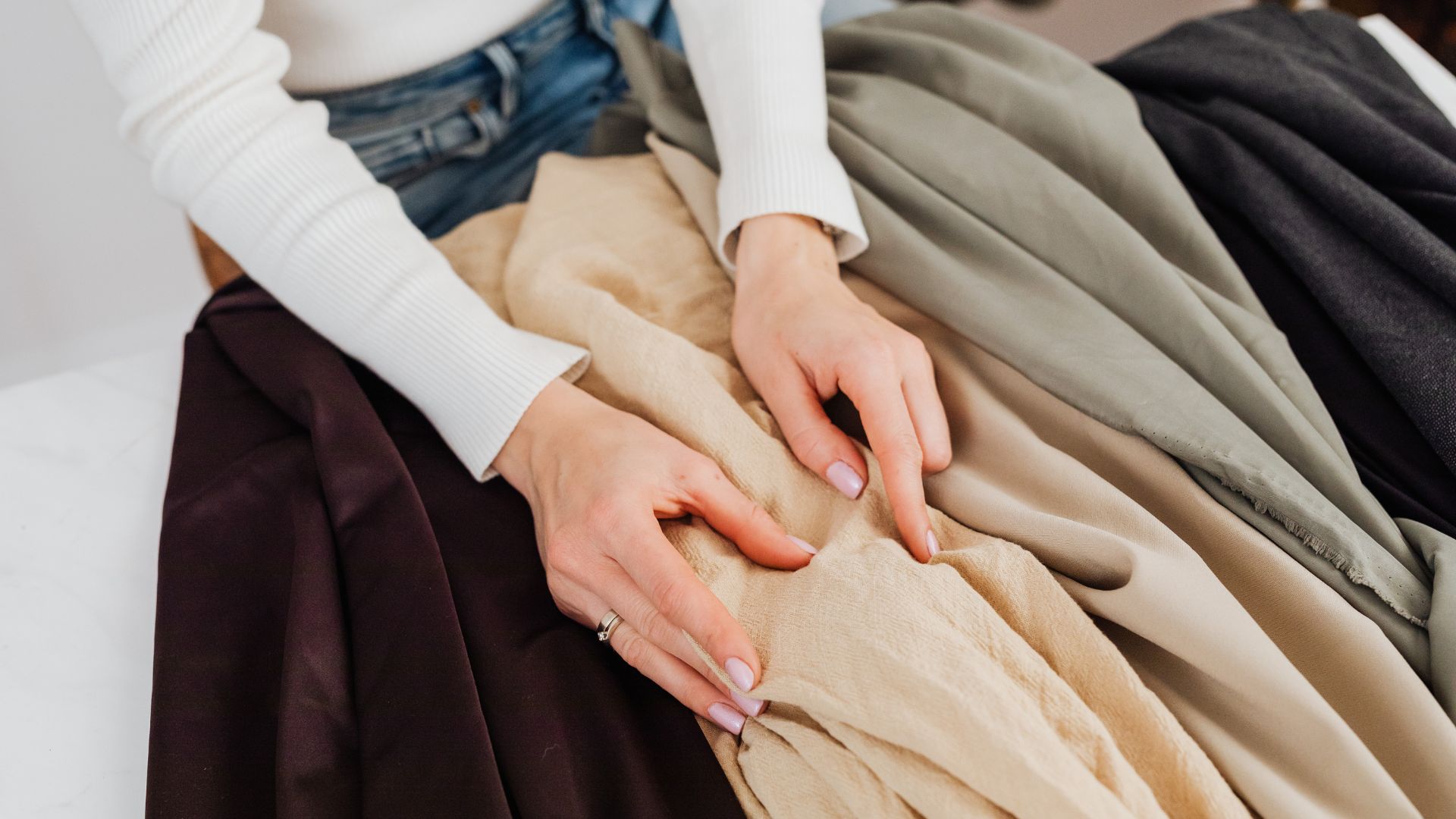
In-person buying is still important in the clothing trade, because a garment is a product you judge with more than your eyes. The fabric, the weight of the cloth, the way it’s sewn, the construction of the shoulders and the line of the cut often come across best in direct contact.
The in-person model offers:
- the chance to see the product up close,
- a faster assessment of the quality of finishing,
- an easier way to catch the differences between models,
- a direct conversation with a representative or the manufacturer,
- greater confidence over first buys.
For some boutiques, this is still an important stage in building a relationship with a supplier. At the start of a partnership especially, an in-person meeting helps you better understand the character of a collection, check the quality of the making and judge whether the manufacturer’s style really suits the shop’s profile.
What makes in-person buying harder?
Although the in-person model gives more contact with the product, it also has limitations that can’t be ignored. The main ones are time, logistics and less flexibility in the buying process itself.
For a boutique owner, that often means:
- having to organise trips,
- a greater demand on time,
- more difficulty replenishing stock as you go,
- less convenience in comparing multiple offers,
- greater dependence on a particular meeting date.
This is felt especially when a shop operates intensively, handles sales across several channels or needs frequent but smaller top-up orders. In that setup, an in-person-only model can simply be less convenient.
Which model better supports a clothing boutique?
If you look at sourcing from the point of view of organising work, speed of response and convenience of ordering, an online wholesaler more often better supports the day-to-day running of a clothing boutique. It makes managing the offer easier and lets you replenish the collection faster without spending extra time on the logistics of buying.
If, however, you look at the first stage of a partnership, at assessing quality and getting to know the character of a collection, in-person buying still has its strong place. It gives more comfort in making those first decisions and helps reduce uncertainty where quality and detail matter a great deal.
The most sensible picture looks like this:
- the online model works better for ongoing sourcing,
- the in-person model can help at the start of a partnership or with important buying decisions,
- most of all, it comes down to the quality of the B2B partner itself.
Not every boutique needs the same thing. A shop with a well-defined customer group and a trusted supplier will usually be quicker to appreciate the efficiency of the online model. A boutique that’s still building the direction of its collection, or looking for a new manufacturer, may want to get to know the product and the brand better first.
How does this look from our perspective at MAKO?
At MAKO, we look at boutique sourcing not only from the product side, but also from the side of how easy the cooperation is. We know a shop owner needs a collection that can be ordered efficiently, planned sensibly and fitted easily into the profile of their own boutique.
That’s why we develop B2B cooperation around ready-made collections for boutiques, wholesalers, online shops and clothing brands. For partners, this means access to elegant womenswear made in Poland, with a consistent style and a quality that counts in day-to-day sales.
Our brand Marguerite by Mako is built on a feminine, modern and refined aesthetic. We sew in Poland, use certified fabrics and create collections that include, among others:
- dresses,
- blouses,
- tunics,
- trousers,
- waistcoats,
- co-ords,
- sweatshirts,
- biker jackets,
- coats,
- layering pieces.
This matters for boutiques that don’t want to buy single, haphazard models, but to stock their shop with a collection that brings consistency and greater order to sales. Sizing 40–54 is important too, allowing the offer to better meet the needs of mature customers, including women 40+.
Online or in person — where to start?
The best supply model is the one that suits how your boutique works and the quality of the partner you want to work with. The buying channel alone doesn’t determine success. What decides it is the quality of the collection, the predictability of the cooperation and whether the supplier helps you build an offer that genuinely makes commercial sense.
If quick, convenient and well-organised sourcing matters to you, the online model offers very strong support today. If you’d rather start by getting to know the product thoroughly and better assessing the details of a collection, in-person contact can be a good starting point. The boutiques that gain the most are the ones that choose a supplier deliberately rather than by chance.
At MAKO, we supply boutiques with ready-made collections of elegant womenswear and work exclusively in a B2B model. If you’re looking for a partner that combines Polish production, certified fabrics, a consistent style and an offer tailored to boutique sales, get in touch. We’d be glad to show you what our cooperation looks like and which collections best match your shop’s profile.