


Margin in a clothing boutique doesn’t begin at the till. It begins much earlier: when you choose a manufacturer, when you plan a collection and at the buying stage. In practice, it isn’t enough to know how much you can add to the purchase price. You also need to understand which styles sell without price resistance, which sizes move best and how markdowns affect the performance of an entire collection.
At MAKO we take exactly this broader view of boutique profitability. For a store owner, what counts isn’t only the margin on a single piece, but also whether the clothing hangs well, holds its quality and can be sold without constantly coming down in price. This matters especially in the elegant womenswear segment, where a customer’s decision to buy often comes down to fit, finishing and trust in the product.
Margin and markup are not the same thing
In conversations about clothing retail these two terms often get mixed up. And if you want to calculate boutique profitability properly, they need to be kept apart.
Markup is the percentage added to the purchase price. Margin is the percentage calculated on the selling price.
A simple example:
- you buy a product for PLN 100 net,
- you sell it for PLN 200 net,
- your profit per piece is PLN 100.
In this scenario:
- the markup is 100%,
- the margin is 50%.
This distinction matters, because a boutique can look “well priced” while in reality operating on a lower margin than the owner assumes. If someone asks how to calculate margin in a clothing store, this is exactly where they should start.
How to calculate margin on a single product
The simplest formula looks like this:
Margin = (selling price − purchase price) / selling price × 100%
This calculation gives you a starting point, but not the full picture. In a clothing boutique, a product doesn’t exist in isolation from the rest of the offer. Even if the margin on the tag looks good, the final result can be weakened by several things:
- slower turnover,
- the need for a markdown,
- returns,
- an incomplete size range,
- inconsistent quality.
So a calculation at the level of a single piece is necessary, but not sufficient. Margin is calculated well when you also look at sales across a whole group of products.
Margin on a product is only the beginning
In practice, a boutique doesn’t earn on what “ought to sell”, but on what actually moves at full price. And this is where the most important part of the analysis begins.
Two products can have an identical starting margin and a completely different end result. One will sell quickly and without a discount. The other will hang around for a long time, need a reduction and ultimately deliver a far weaker profit.
That’s why, when assessing profitability, it’s worth looking at several elements at once:
- turnover, meaning the pace of sales,
- the proportion of markdowns, which reduce your real margin,
- product quality, because it affects returns and the decision to buy,
- how well the cut fits, which improves sales in the fitting room and online,
- the size range, because it often decides whether a style sells broadly or only in part.
This is precisely why a cheap purchase doesn’t always mean a good profit. If a product doesn’t defend its price through quality, cut and finishing, the boutique gives up its margin at the first markdown.
A Polish clothing brand for retailers and boutiques
Marguerite by Mako is a Polish manufacturer of women's clothing that blends manufacturing expertise with modern, elegant design. We create collections with boutiques and wholesalers in mind, paying close attention to seasonality, the functionality of each style and the expectations of end customers. Working with our business partners, we develop a range that not only looks good but also genuinely responds to the needs of the market.
Collections designed to sell
Trend analysis, manufacturing expertise and feedback from our business partners allow us to create styles that fit the needs of boutiques and the expectations of today's customers.
How to calculate the profitability of a whole collection
In a well-run boutique, not every style has to earn identically. A collection is worth analysing as a whole, rather than as a set of unrelated pieces.
Some products sell more strongly and enjoy greater price acceptance. Others play a supporting role. A dress can draw attention and build a higher basket value, while a blouse or a cover-up closes the sale.
From the store’s perspective, then, what matters isn’t only how much you earn on one item, but also:
- whether the style raises the average basket value,
- whether it supports sales of other products,
- whether it holds its price without an early markdown,
- whether it fits with the rest of the collection.
When buying for a boutique, it’s helpful to look at a collection in three layers:
- styles intended to sell broadly,
- styles that build the character of the offer,
- supporting styles that strengthen the overall purchase.
This approach brings order to your decisions and lets you assess womenswear sales through more than the lens of a single price tag.
The size range has a direct impact on margin
This is one of the more frequently overlooked topics. A boutique owner may be perfectly capable of calculating purchase price and selling price, yet not always analyse how the size structure itself affects results. If a style looks good but its size range is poorly planned, part of the potential sale simply slips away.
This applies particularly to boutiques whose offer is aimed at mature customers. In this segment, sizes 40–54 are not an add-on to the collection. For many stores they are a significant part of real demand.
A well-planned size range affects profitability in several places:
- it increases the chance of selling a full batch,
- it reduces individual sizes being left on the rail,
- it improves the match with the customer group,
- it eases the pressure to mark down end-of-range stock.
At MAKO we see this very clearly. When clothing is well cut and available in sizes 40–54, a boutique has a far better chance of selling a collection broadly rather than only in patches. For a store’s results, that’s a real difference.
Quality and fit also work for your margin
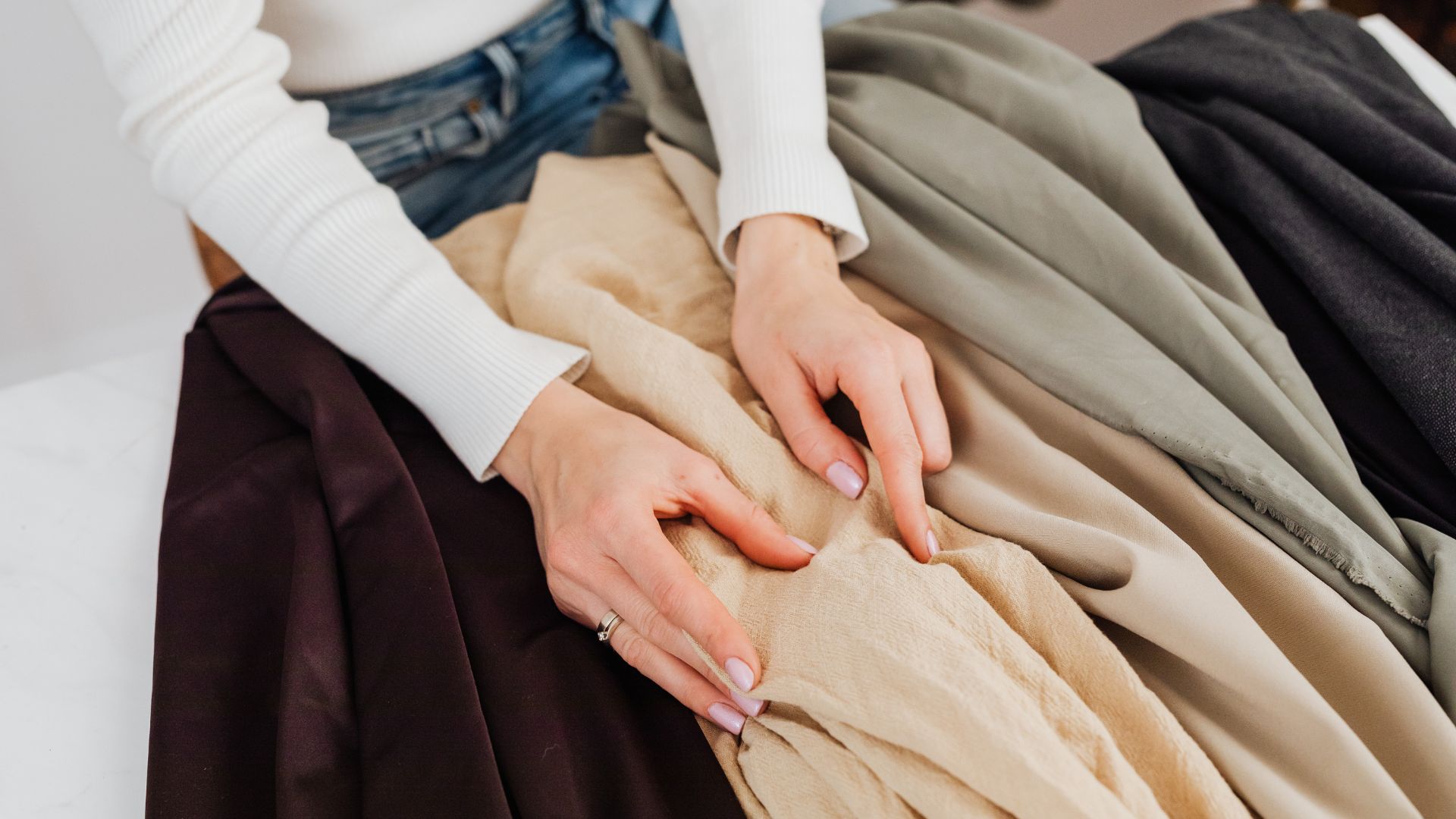
Margin in a clothing boutique isn’t purely the product of a calculator. It’s also built by the things a customer notices immediately: the fabric, the line of the cut, the way the garment sits and the finishing. These are what decide whether the retail price feels justified.
If clothing:
- hangs well,
- is carefully finished,
- looks consistent with the boutique’s profile,
- holds its quality after trying on and in wear,
it sells more easily without a discount. And that means a healthier margin.
This is why, when buying, it doesn’t pay to look solely at a low cost of entry. Sometimes a product bought more cheaply earns less, because it reaches the “sale” tab sooner. A better style, made from good fabric and well matched to the customer’s figure, more often holds its regular price and delivers calmer sales.
What to check before buying a collection for your boutique
If you want to take a broader view of margin, it’s worth running through a short list before ordering:
- Does this style have the potential to sell without an early markdown?
- Does its quality justify the planned retail price?
- Does the cut suit your customers’ figures?
- Does the size range match real demand?
- Does the product fit the collection and build basket value?
- Does the manufacturer deliver consistent quality?
These are simple questions, but they help separate a purchase that only appears profitable from one that genuinely strengthens your boutique’s profitability.
Margin starts with your choice of manufacturer
A well-calculated margin doesn’t end with a formula. It’s a way of thinking about the whole of your store’s buying: from the product, through the size range, to the performance of the collection.
This is exactly why working with the right manufacturer matters so much. If clothing is well made, based on certified fabrics and designed with real sales in mind, a boutique stands a better chance of holding its prices and improving its results.
At MAKO we work with B2B partners in precisely this model. As a Polish womenswear manufacturer, we develop elegant, modern collections refined in terms of quality, cut and size range. For boutiques, online stores and wholesale partners this matters not only for image, but for sales.
If you’re analysing your boutique’s profitability and looking for a collection that should work not only aesthetically but commercially, it’s worth taking a closer look at how quality, fit and sizing affect margin in practice. If you’d like to discuss this further, we invite you to contact our B2B team — we’d be glad to talk about working together and about our offer for boutiques.