

A good collection doesn’t end with the product itself. In online retail, the information that comes with a style matters just as much: the fabric composition, the size range, the description of the cut, the photographs, the intended use and the way it’s all presented. These are what decide whether a customer pauses on a product page, whether she understands who the piece was designed for and whether she adds it to her basket without hesitating.
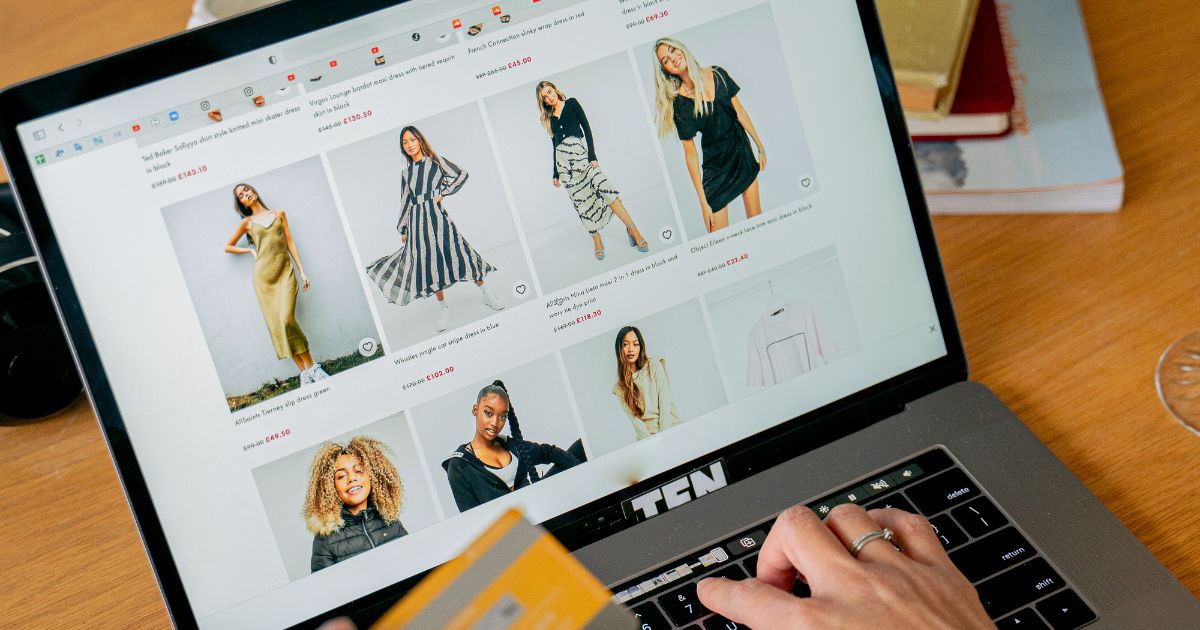
From an online boutique’s point of view, the product page is where selling meets specifics. It isn’t enough to show a dress, a blouse or a co-ord. You also have to describe well how the garment looks, how it sits and what she can expect from it. The more refined the product page, the greater the chance of a sale without follow-up questions, sizing mistakes and disappointment when the parcel arrives.
A product page in a clothing store either sells or undermines the sale
In a bricks-and-mortar store, a customer can walk up to the rail, feel the fabric and step into the fitting room. In e-commerce, everything has to be shown and named. If a product page is too general, imprecise or thin, the product starts losing ground at the very first point of contact.
The most common consequences of a poorly prepared product page are:
- lower conversion,
- more pre-purchase questions,
- a higher risk of returns,
- difficulty justifying the price,
- weaker positioning in search results.
That’s why a product page in an online boutique shouldn’t be treated as a formality. It’s one of the fundamental selling tools. Prepared well, it helps the customer make a decision and it brings order to the store owner’s communication, collection presentation and copywriting.
What should a good womenswear product page contain?
1. A product name that brings order to the offer
The first element is the name. It shouldn’t be arbitrary or overly decorative. In an online boutique, a product name should help with orientation, not cloud the message. Ideally it indicates the category and the character of the style straight away.
In practice, names that clearly communicate what the customer is looking at work better than expressions that are striking but vague. In a clothing store, clarity usually beats excessive creativity.
2. A product description that explains the cut and the character of the style
This is one of the most important elements of the whole page. A womenswear product description shouldn’t be a collection of generalities. Its job is to show what sets a given style apart within the offer.
A good description answers a few simple questions:
- what kind of cut is it,
- how does it sit on the body,
- what occasions does it suit best,
- what is its stylistic character,
- what can it be worn with.
In e-commerce it isn’t enough to write that a dress is elegant or a blouse stylish. You have to specify what that means. Is the cut relaxed or more fitted? Is the style better suited to everyday wear, to the office, to social occasions, or to a more formal look?
This is where a product page really starts to sell. A customer isn’t buying a name. She’s buying a picture of how the garment will function in her wardrobe. The description also needs to be optimised for SEO, of course, so that customers can find the product more easily in search.
3. Fabric composition that builds trust
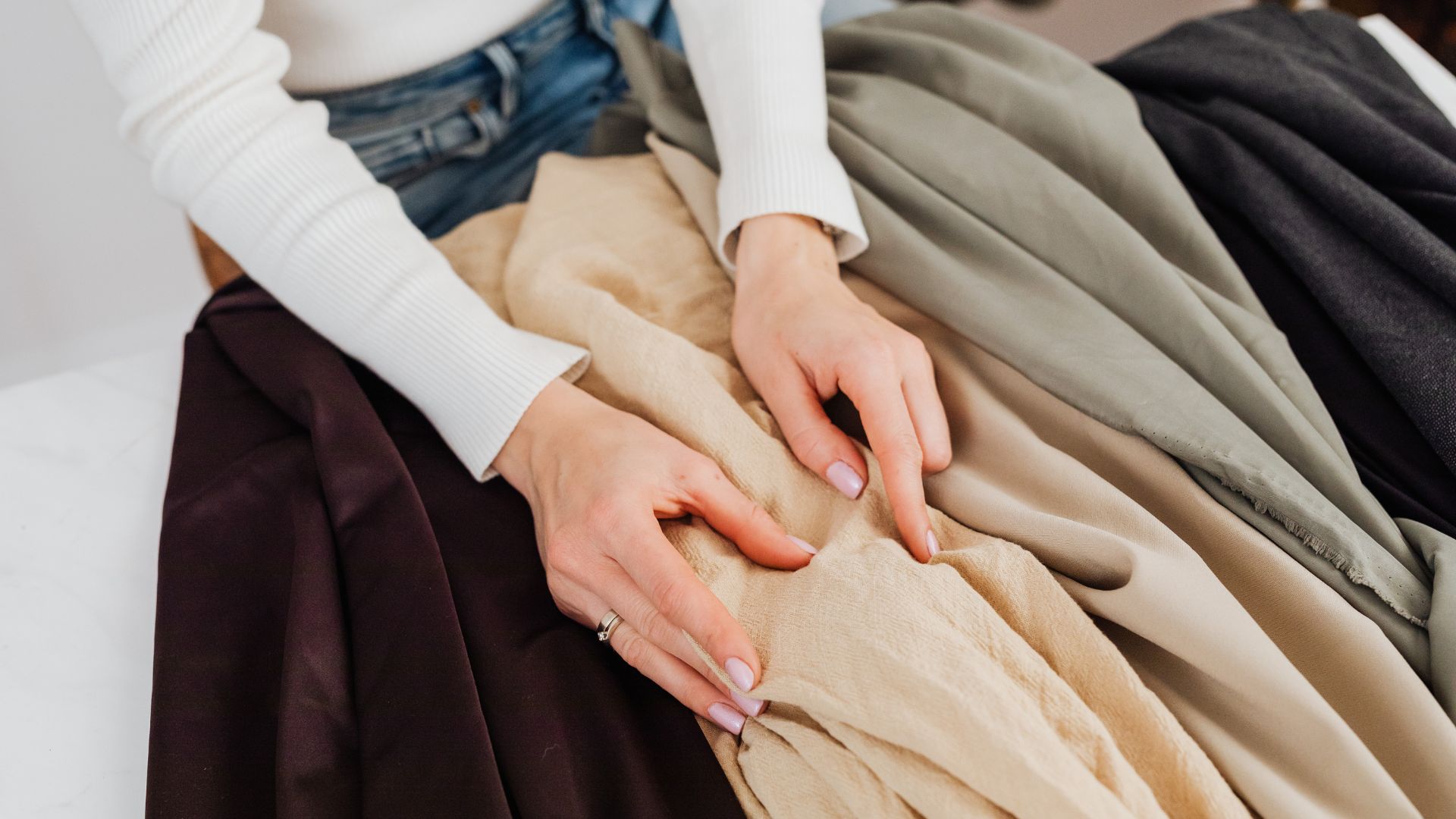
In the clothing industry, composition isn’t a technical detail. It’s one of the fundamental pieces of purchasing information. For many customers it influences the decision as much as the cut or the colour.
The product page should therefore state the fabric composition clearly. Without hiding it behind abbreviations and without leaving the subject for later. Online, a customer wants to know what a garment is made from before she decides to buy.
From the perspective of a manufacturer and B2B partner, a well-organised fabric composition serves one more function: it strengthens the credibility of the offer. At MAKO we work exclusively with certified fabrics, which is why information about the material isn’t an add-on to the description for us, but a natural part of presenting the product.
A Polish clothing brand for retailers and boutiques
Marguerite by Mako is a Polish manufacturer of women's clothing that blends manufacturing expertise with modern, elegant design. We create collections with boutiques and wholesalers in mind, paying close attention to seasonality, the functionality of each style and the expectations of end customers. Working with our business partners, we develop a range that not only looks good but also genuinely responds to the needs of the market.
Collections designed to sell
Trend analysis, manufacturing expertise and feedback from our business partners allow us to create styles that fit the needs of boutiques and the expectations of today's customers.
4. A size range that leaves less to guesswork
One of the most common reasons for returns in online retail is a misjudged size. The information “40, 42, 44” on its own usually isn’t enough. Context is needed: how a given style comes up and what figure it was designed for.
A good womenswear size guide on a product page should therefore be clear and practical. What helps here:
- the range of available sizes,
- clear size labelling,
- information about the character of the cut,
- an indication of whether the style is more relaxed or closer to the body.
In elegant womenswear this matters particularly. A customer buying online wants to reduce the risk of getting it wrong. The better the size and cut are described, the greater the chance she’ll choose the right style first time.
At MAKO we also develop collections in sizes 40–54, so we know how important it is to communicate fit precisely. A well-prepared product page should help with the choice, not force the customer to guess.
5. A description of the cut and the fit
Size is one thing, but the number alone won’t tell the whole story. The product page should also describe clearly how the cut behaves. This is especially important with dresses, tunics, trousers, co-ords and coats — anywhere the construction of a style shapes the overall impression.
It’s worth indicating:
- whether the cut is straight, flared, loose or more fitted,
- whether the style emphasises the waist or allows more freedom,
- what effect it creates on the body,
- whether it works better with a particular kind of look.
This doesn’t have to be an extensive description, but it does have to be specific. It helps the customer understand the product better, and it reduces the number of situations where the photograph and the reality of the garment don’t quite line up.
Product photography isn’t decoration — it’s a selling tool
On a product page, photographs perform the function that physical contact with the garment performs in a bricks-and-mortar store. It’s on this basis that a customer judges proportion, detail, the character of the fabric and the general standard of the product.
Good photographs should show:
- the full figure,
- the finishing details,
- how the garment sits,
- the front and the back,
- the character of the cut in a natural presentation.
In e-commerce, it isn’t only the technical quality of the images that matters, but their consistency. If every collection is presented differently, the store loses its visual order. If the photographs are imprecise, the product page starts working less effectively, even with good clothing behind it.
From the point of view of working with a manufacturer, this is an important subject. An online boutique needs materials that allow it not just to show a product, but to sell it. A good collection should therefore come with materials that support its presentation.
Stating the intended use helps the customer decide faster
Not every customer buys clothing in the same way. One is looking for something for work, another for a family occasion, a third wants to add something more versatile to her wardrobe. That’s why a product page should suggest the context in which a given style works best.
This isn’t about spinning an elaborate story, but about grounding the product practically. With elegant womenswear, it works well to indicate whether a style suits:
- everyday elegance,
- work,
- social occasions,
- more formal outings,
- seasonal looks.
This kind of information brings order to the buying decision. The customer recognises more quickly whether the product answers her need. And the boutique builds a more professional picture of its offer.
Why a complete set of collection information matters from a B2B perspective too
An online boutique owner doesn’t only need finished stock from a manufacturer. They also need the information that will let them introduce that stock into their store correctly. The better prepared a collection is, the more smoothly product pages, category descriptions and sales communication can be put together.
This matters particularly when a store:
- operates exclusively online,
- is developing online sales alongside a physical showroom,
- wants to maintain a consistent standard of descriptions,
- works with a larger number of styles and categories.
In practice, then, good B2B cooperation means access not only to womenswear, but also to the information that helps sell it. From this perspective, a collection should be prepared so that a store doesn’t have to work out every style from scratch.
Product pages and SEO in a clothing store
A well-prepared product page supports not only sales, but also the store’s visibility in Google. This applies especially to more specific queries relating to a particular category, cut or garment type.
What helps here:
- precise naming,
- unique descriptions,
- natural use of category-related phrases,
- a logical information structure,
- consistency in how products are presented.
This matters because an online womenswear boutique builds traffic not only through its homepage and categories, but through the product pages themselves. If they’re too thin or duplicated, the store loses search potential. If they’re refined, they start working for sales and visibility at the same time.
What every collection should come with before it goes on sale online
From an online store’s perspective, the collections that sell best are those backed by a full set of well-organised information. Before introducing products to your store, it’s worth making sure you have:
- product names,
- a description of the cut,
- the fabric composition,
- a clear size range,
- information about the character of the fit,
- photographs that present the style in a sales-ready way,
- an indication of the style or intended use of the product.
The fewer gaps at this stage, the more smoothly the whole process of launching a collection runs. This matters not only for large online retailers. A bricks-and-mortar boutique developing online sales also needs materials that shorten the path from delivery to publishing the product.
At MAKO we take a broader view of a collection than the garment alone. As a Polish womenswear manufacturer working exclusively B2B, we know that what counts for our partners isn’t only the quality of the sewing, the certified fabrics and the refined cut, but also whether the product can be presented well in online retail.
If you run an online boutique, are developing a clothing store in the online channel or are looking for a manufacturer whose collections are easy to launch and clear to sell, it’s worth discussing not just the clothing itself, but the information that comes with it. Very often that’s what determines whether a product simply appears in your store, or actually starts to sell.