

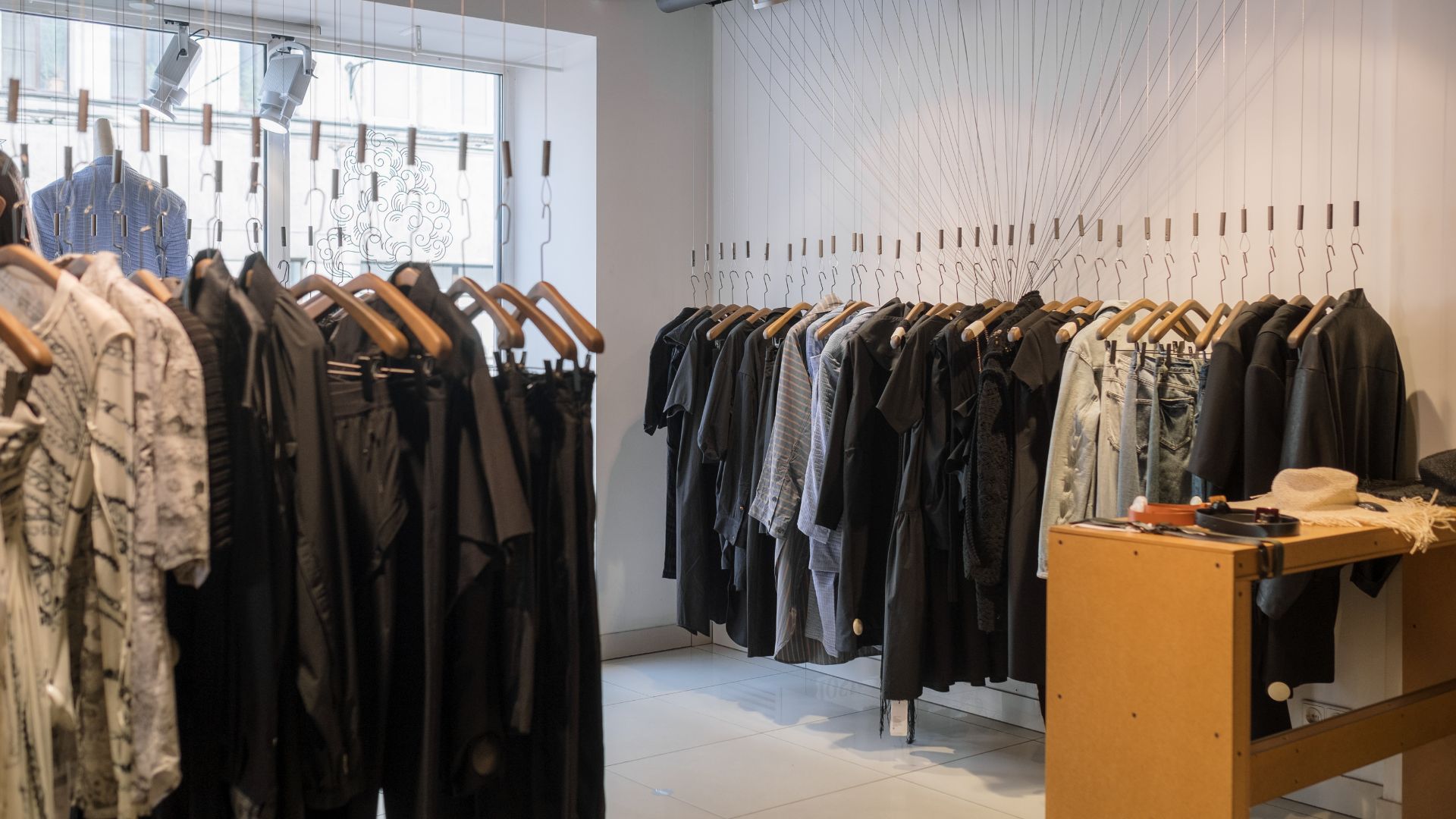
In the women’s plus-size segment, the same pattern held for years: the larger the size, the looser the cut, the more fabric, and the less defined the shape. From a boutique sales perspective, that approach is hard to call good enough. Customers who wear sizes 40–54 aren’t only looking for clothes that hide something. They’re looking for cuts that fit well, flatter the body’s proportions, allow freedom of movement, and look elegant.
For a boutique owner, this means a shift in how you think about stock. Plus-size clothing shouldn’t be a simplified version of the collection. It should be designed with the same care for construction, material, and detail as every other style.
A larger size doesn’t mean a single body shape
The biggest oversimplification in plus-size design is the assumption that all customers in larger sizes have similar needs. In reality, size tells only part of the story about a body. Shoulders, bust, waist, and hips differ in proportion, as do torso length and the way fabric drapes in movement.
That’s why simply increasing the width of a style rarely produces a good result. A garment can have the right measurements and still sit badly. Shoulders that are too wide, a waistline set too low, an ill-considered length, or excess fabric in the wrong place quickly undermine how a cut is perceived.
A customer judges a garment on herself, not on the label. If the size is right but the construction doesn’t work with the body, selling it becomes harder.
Why a loose cut doesn’t always help
Looser cuts have their place in a collection. A tunic, a throw-on layer, or a relaxed sweatshirt can be a very good product when that’s the intention behind the design. The problem arises when a loose cut becomes the only answer to a larger size.
Excess volume can:
- throw off the body’s proportions,
- make a garment look heavier,
- strip a style of its elegance,
- make it harder to style with other pieces,
- cause different cuts to start looking alike.
A customer looking for an elegant dress, trousers, or a set doesn’t always want to hide her figure under a plain, wide shape. Often a better result comes from a well-placed line, the right length, a good waist position, or a construction that leaves room to move without giving up shape.
A good fit doesn’t mean a tight garment
In conversations about larger sizes, it’s easy to set a loose cut against a fitted one. But well-fitted clothing doesn’t have to be tight.
Above all, a good fit means that a garment:
- has the right proportions,
- doesn’t pull in critical places,
- doesn’t create accidental excess fabric,
- allows freedom of movement,
- sits in line with the way the style is constructed.
This matters especially in elegant women’s clothing. A dress can have a soft line and still flatter the figure. Trousers can be comfortable while keeping a tidy cut. A set doesn’t have to be stiff to look polished.
Styles like these are also easier to sell, because the larger size doesn’t look like a technical add-on to the collection.
A Polish clothing brand for retailers and boutiques
Marguerite by Mako is a Polish manufacturer of women's clothing that blends manufacturing expertise with modern, elegant design. We create collections with boutiques and wholesalers in mind, paying close attention to seasonality, the functionality of each style and the expectations of end customers. Working with our business partners, we develop a range that not only looks good but also genuinely responds to the needs of the market.
Collections designed to sell
Trend analysis, manufacturing expertise and feedback from our business partners allow us to create styles that fit the needs of boutiques and the expectations of today's customers.
The construction of a cut matters more than the number on the label
Well-designed plus-size clothing isn’t about mechanically enlarging a single size. A change of scale affects the proportions of the whole construction. This is exactly where a manufacturer’s experience becomes especially important.
Among the things that count are:
- the placement of darts and seams,
- the way the side line is drawn,
- the ratio of length to width,
- the shape of the sleeve,
- where the waist is set,
- how the style behaves in movement.
For a B2B partner, the effect of all this is very practical. A well-constructed style passes the fitting-room test more easily, because the customer is judging first and foremost whether she looks good and feels good in the garment.
Plus-size clothing should have style, not just function
One of the problems with this category is that it gets reduced to function: it should be comfortable, loose, and safe. That’s not enough, especially in a boutique that builds its offer around a particular aesthetic.
Women who wear larger sizes are looking for an elegant dress for an occasion, modern trousers, a well-tailored blouse, a set, a coat, or a biker jacket. They expect choice, not a single formula repeated over and over.
That’s why, when buying stock, it’s worth checking whether the collection in sizes 40–54 has a character of its own. Do the cuts differ from one another? Can you build outfits from them? Does a style look modern and mature, rather than conservative simply because it comes in a larger size?
At MAKO, this is exactly the lens through which we look at the Marguerite by Mako collections. We create elegant, modern women’s clothing for women over 40, and sizes 40–54 are a natural part of the offer. We don’t treat a larger size as a separate aesthetic category.
The material should support the cut
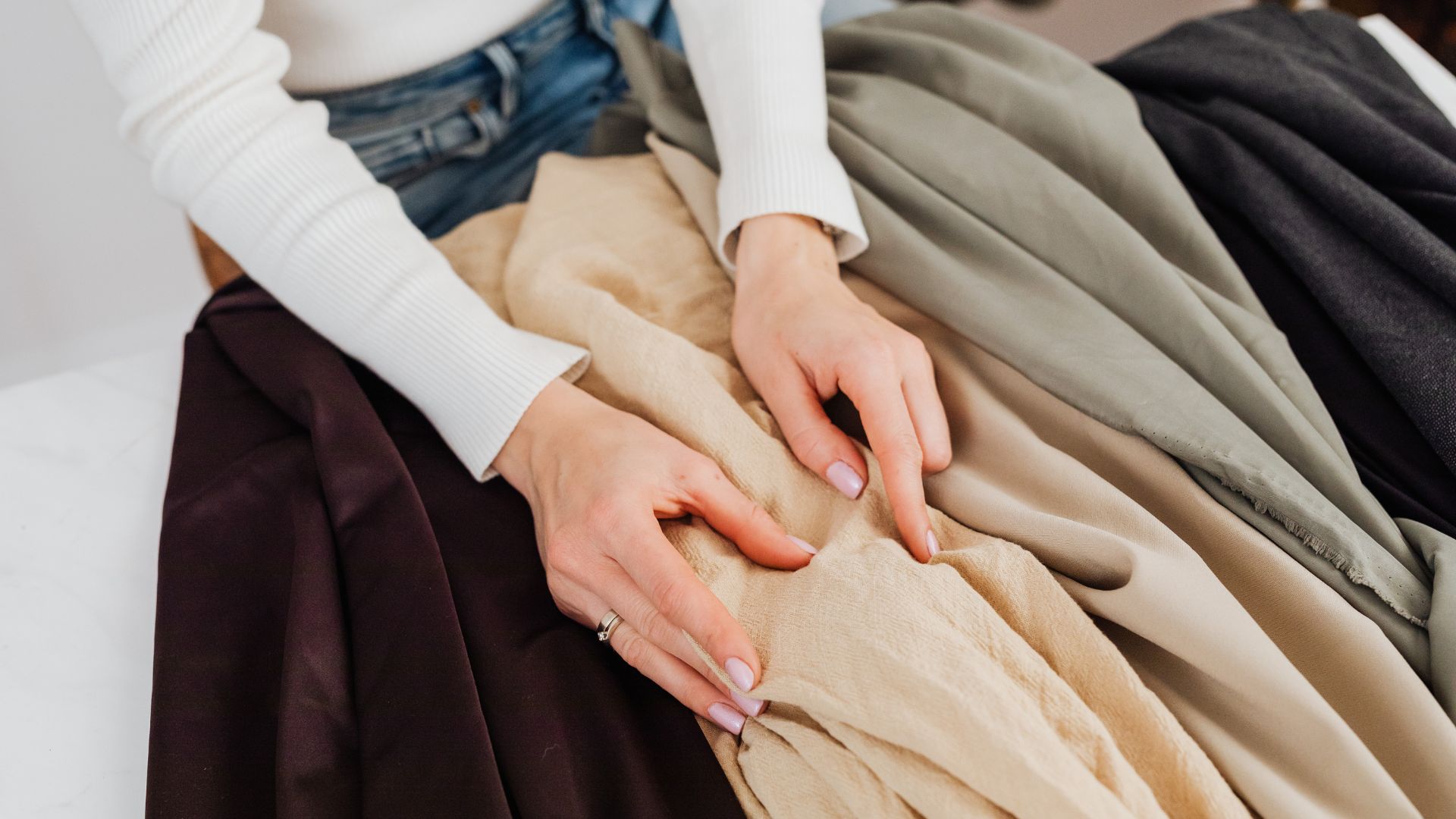
Even a well-designed cut can lose quality if the material doesn’t work with the construction. In larger sizes this matters all the more, because the fabric or knit has a stronger influence on how a style sits on the body.
When choosing a material, what counts is whether it:
- holds its shape,
- drapes well in movement,
- doesn’t add accidental volume,
- suits the character of the particular cut,
- supports comfort in wear.
A product that looks good in a photo but loses its shape once it’s put on quickly disappoints. The right material helps bring out the strengths of the construction.
In our production we use only certified materials, and we treat their selection as part of the work on the whole style.
Which cuts make sense in a boutique with clothing in sizes 40–54?
There’s no single list of styles that “suit” larger figures. That approach leads to oversimplification. It’s far better to build an offer from different categories and different types of construction.
In a boutique, it’s worth making room for:
- dresses with varied lines,
- blouses that can be paired with trousers and waistcoats,
- tunics of a well-judged length,
- trousers with a good fit through the waist and hips,
- sets that allow a coherent outfit,
- throw-on layers and coats that tidy the silhouette,
- more relaxed sweatshirts and bolder biker jackets.
This approach gives the customer choice and broadens your sales opportunities. A boutique can build outfits and respond to different needs: everyday, professional, occasion-based, or seasonal.
What should a boutique owner check before buying a plus-size collection?
When buying wholesale, it’s a good idea to look at larger sizes through more than the lens of which numbers are available. The mere fact that a collection goes up to size 50 or 54 says nothing yet about the quality of its fit.
Before ordering, it’s worth assessing whether:
- the cuts keep their proportions in larger sizes,
- the collection isn’t built solely on loose tunics and wide shapes,
- the styles have a distinct look,
- the material supports the construction,
- the finishing is equally careful across the whole size range,
- the offer matches the profile of the boutique’s customers.
In an online shop, good structural fit also reduces the risk that a customer orders the right size only to find it sits badly in practice.
Larger sizes can be a full part of an elegant collection
Plus-size clothing doesn’t have to look conservative or be confined to cuts whose main purpose is to disguise the figure. A well-designed collection can be feminine, elegant, modern, and varied regardless of size.
Customers quickly notice whether larger sizes are taken seriously. A coherent choice of dresses, blouses, trousers, sets, waistcoats, coats, and throw-on layers builds a more credible offer.
At MAKO we combine tailoring tradition with modern design precisely so that a larger size doesn’t mean giving up on form. A good fit, careful finishing, and a well-thought-out cut are, for us, part of one and the same process.
For a boutique, it’s not the size that counts, but the quality of the whole collection
If your shop’s customers wear sizes 40–54, it’s worth looking for a manufacturer that doesn’t treat this group as an add-on to the core offer. What matters far more is whether the collection was designed with real body proportions in mind, whether it gives a choice of cuts, and whether it keeps a consistent style.
A loose cut can be a good solution, but it should be one option among several — not the only answer to a larger size.
At MAKO we produce elegant women’s clothing in Poland for B2B partners: brick-and-mortar and online boutiques, wholesalers, distributors, brands, and companies. If you’re looking for a collection in sizes 40–54, or a production partner to develop an offer for mature women, get in touch about wholesale cooperation and new commissions.