

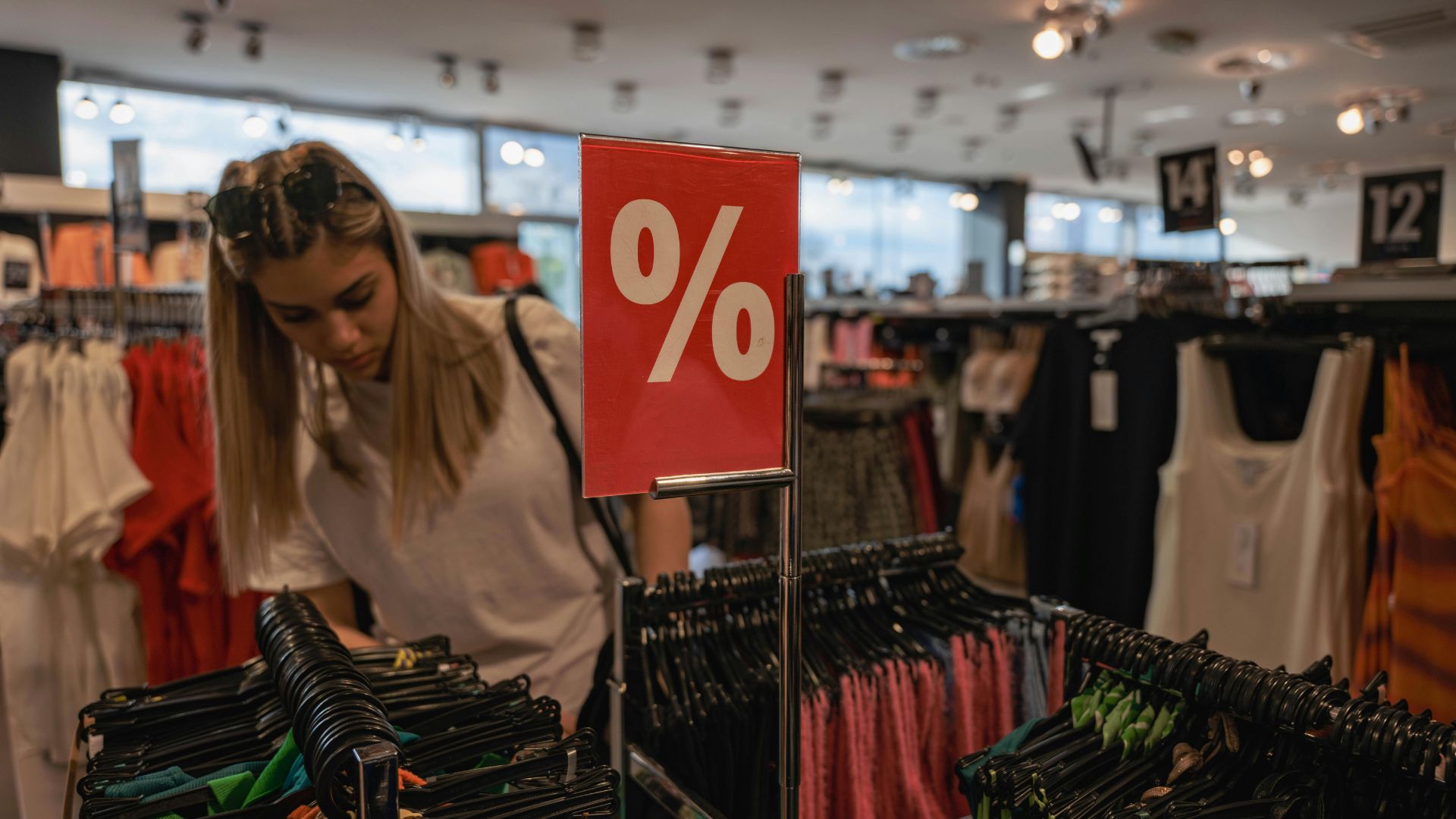
Markdowns in a boutique can improve how smoothly your stock sells, tidy up the tail end of a collection and free up space for new merchandise. They can also quickly eat into your margin, throw your pricing policy off balance and train customers to believe the smart move is simply to wait before buying. A price cut, then, is neither good nor bad in itself. It all depends on why it’s done, when it appears and how it’s communicated.
From our point of view, markdowns work best when they’re part of a plan rather than a reaction to buying chaos. A boutique owner should treat them as a tool for managing the offer, not as the main way to generate footfall. A well-planned markdown helps close out a season and improve turnover. A badly planned one starts to erode your full-price sales.
When markdowns genuinely help
Not every price cut is a sign of trouble. There are situations where a markdown makes business sense and works in the shop’s favour.
It most often helps when:
- you need to clear the last few sizes or individual models,
- a collection is reaching the end of its selling stage,
- a change of season is coming and you need room for new stock,
- a product is turning over slowly despite a proper display and communication,
- the boutique wants to close out a particular group of stock without stretching the sales over further weeks.
In cases like these, a markdown needn’t do any harm. Quite the opposite. It can help you recover the funds tied up in stock more quickly and tidy up the offer before your next buy. The trouble begins when a discount becomes the answer to everything: slower footfall, poor buying decisions, too broad a range or simply a lack of ideas for selling.
When markdowns start to do harm
The biggest mistake is cutting prices too early or too widely. If customers see that new models quickly land in the sale section, they learn a simple lesson: there’s no need to buy straight away — you just have to wait a while.
This weakens full-price sales and changes how the shop is perceived. Instead of a place with a carefully considered offer, the boutique starts to be seen as somewhere you can nearly always buy for less.
Warning signs are situations where:
- markdowns appear almost constantly,
- the discount covers too large a part of the collection,
- products that still have full-price selling potential are being reduced,
- the pricing policy isn’t consistent between the physical shop and online,
- the way discounts are communicated is chaotic and haphazard.
Frequent markdowns spoil more than your margin. They also undermine trust in the full price. And once the full price stops being credible, the shop starts operating in a mode of permanent promotion.
A good markdown starts earlier than the day of the price cut
A markdown shouldn’t be planned only once the stock is sitting unsold. That moment is usually the result of decisions made much earlier: when buying the collection, choosing the size range, setting prices and stocking the categories.
That’s why a sensible discount policy starts with a few questions:
- which product groups have a shorter selling cycle,
- which categories turn over steadily and don’t call for quick discount decisions,
- which models we buy more for image and which strictly for sales,
- where the last remaining sizes will be natural and where they’ll be a risk to the display,
- how much room we leave in the budget for situations where some stock will have to be closed out on price.
This is precisely why the choice of manufacturer and of the collection itself matters so much. The better the quality, the better the fit and the more predictable the sales, the less pressure there is to discount quickly. In a boutique, the stock that sells well isn’t the stock you can cut the hardest, but the stock that holds its price for most of the season.
How to plan markdowns without spoiling your margin
The safest model is one where the markdown has a clear purpose. Not “we’re cutting prices to make something happen,” but knowing exactly what we want to achieve.
A Polish clothing brand for retailers and boutiques
Marguerite by Mako is a Polish manufacturer of women's clothing that blends manufacturing expertise with modern, elegant design. We create collections with boutiques and wholesalers in mind, paying close attention to seasonality, the functionality of each style and the expectations of end customers. Working with our business partners, we develop a range that not only looks good but also genuinely responds to the needs of the market.
Collections designed to sell
Trend analysis, manufacturing expertise and feedback from our business partners allow us to create styles that fit the needs of boutiques and the expectations of today's customers.
Separate your strong products from your problem products
This is the basic principle. Not everything should go into a promotion just because part of the collection is turning over more slowly. It’s worth separating:
- models that are still selling well,
- the last remaining sizes,
- seasonal products,
- items that were poorly received from the start.
This kind of split protects your margin. It lets you cut the price where it’s needed, without spoiling the value of the whole offer.
Don’t mark down too early
If a boutique goes into a discount too soon, it robs itself of the chance to sell at full price. Sometimes a product needs a better display, a change of styling, a stronger showing on social media or simply a few more days on sale.
A markdown should be the next step, not the first reflex.
Don’t mark down whole categories without a clear reason
A message like “all dresses -20%” looks striking, but it often works too widely. It sweeps in models that would have sold without a discount. It’s far safer to work on a selected group of products or at a specific stage in the collection’s cycle.
Polska marka odzieży dla sprzedawców i butików
Marguerite by Mako to polski producent odzieży damskiej, który łączy doświadczenie produkcyjne z nowoczesnym, eleganckim wzornictwem. Tworzymy kolekcje z myślą o butikach i hurtowniach, zwracając uwagę na sezonowość, funkcjonalność modeli oraz oczekiwania klientek końcowych. Dzięki współpracy z partnerami biznesowymi rozwijamy ofertę, która nie tylko dobrze wygląda, ale też realnie odpowiada na potrzeby rynku.
Kolekcje projektowane z myślą o sprzedaży
Analiza trendów, doświadczenie produkcyjne i feedback od partnerów biznesowych pozwalają nam tworzyć modele, które wpisują się w potrzeby butików oraz oczekiwania współczesnych klientek.
How to communicate markdowns without lowering the value of the shop
The price cut itself is only half the job. The other half is communication. And this is exactly where many boutiques lose out on their image needlessly.
Good markdown communication should be:
- specific,
- calm,
- consistent with the brand’s aesthetic,
- built on a clear sales reason.
Messages grounded in the real context of the offer work better than shouty slogans about a “huge sale on everything.” A boutique with elegant womenswear should communicate its promotions the same way it communicates the collection itself: matter-of-factly, tastefully and without desperation.
Show what the discount applies to
Rather than communicating a markdown in general terms, it’s better to name its scope:
- selected models from the end of the collection,
- the last sizes,
- selected seasonal cuts,
- selected product groups.
A message like this sounds more credible and doesn’t weaken the whole offer.
Keep it consistent across channels
If a boutique operates both in-store and online, the customer shouldn’t be getting contradictory signals. A different price, a different scale of discount or a different promotion date across channels quickly causes confusion. And pricing confusion lowers trust.
Don’t build your communication on the discount alone
A reduced product should still be shown as a good product. In your communication, it’s worth continuing to work with the cut, the fabric, the style and the use. The discount alone won’t secure a sale if the customer still doesn’t see the value of the model.
A markdown won’t fix a badly bought collection
This is one of the more important things that’s rarely said outright. If a boutique regularly has to rescue its sales with a discount, the problem usually doesn’t lie in the communication alone. It often starts earlier: with the buying of the collection, the choice of models or the quality of the product.
Stock that’s well made, well fitted and consistent with the customer profile usually holds its full price for longer. Random stock, weaker in quality or mismatched to its audience, ends up in a promotion far sooner.
At MAKO, this is exactly how we look at the subject. As a Polish womenswear manufacturer working exclusively B2B, we know that what counts for boutiques isn’t only the model itself, but also how long it can keep selling without pressure to discount. In-house production in Poland, certified fabrics, well-refined cuts and collections created with elegant womenswear in sizes 40–54 in mind give trade partners a steadier basis for planning their sales.
Markdowns should organise your sales, not replace them
A well-run boutique doesn’t give up on markdowns. It uses them when they make sense. It treats them as a tool for managing a product’s life cycle, not as a permanent mechanism for driving turnover.
If you want to run your pricing policy more calmly and without constantly cutting into your margin, it’s worth starting with the quality of your buys, the consistency of the collection and the choice of a manufacturer whose clothing holds up even without a promotion. At MAKO, this is exactly the perspective we take when we talk with our partners: not just about the stock itself, but about how to build a boutique offer that sells steadily. If you’re looking for a collection for your boutique or a B2B partner to develop your offer further, do get in touch.