

Dresses are one of those categories that can do a lot to shape the character of a whole boutique. They draw attention, look good on display, and let you build an offer for a range of occasions. At the same time, they’re demanding to buy. A style that looks good in a photo doesn’t always look as good on the body, and an attractive wholesale price is no guarantee of good sales.
Start with your customer profile, not with the collection itself
The most common mistake in buying stock is purchasing what looks good in the manufacturer’s catalogue, without reference to a particular shop’s customers. A dress can be well designed, but if it doesn’t match the style, body shapes, and needs of the people who visit the boutique, it will be hard to sell.
Before choosing a collection, it’s worth answering a few questions:
- what age are the shop’s main customers,
- which sizes do they most often look for,
- do they choose everyday, elegant, or more occasion-based cuts,
- is a trend or timelessness more important to them,
- which lengths and constructions sold best in the past.
You buy dresses one way for a boutique focused on very young fashion, and quite another way for a shop whose customers are mature women who expect elegance, a good cut, and comfort.
At MAKO we develop the Marguerite by Mako brand precisely in that second direction. We design elegant, modern women’s clothing for women over 40, so with dresses we place great importance on proportion, fit, and construction suited to real bodies.
A dress’s cut has to prove itself beyond the product photo
When buying wholesale, it’s easy to judge a style mainly on how it looks. Yet what often decides whether it sells is the fitting itself. A dress should sit well on the body, keep the right proportions, and give the customer freedom of movement.
A well-designed cut takes into account, among other things:
- the shoulder line,
- how it sits across the bust,
- the proportions of waist and hips,
- the length,
- how the material behaves in movement.
This matters particularly in larger sizes. It isn’t enough to create a single design and then mechanically scale up its measurements. The wider the size range, the more important the construction becomes.
So when choosing a wholesale range of dresses, it’s worth checking whether the manufacturer genuinely works on the fit of its cuts, rather than settling for attractive design. From a boutique’s point of view, a well-fitting dress is simply easier to sell.
The size range should match real demand
A wholesale purchase should follow what your customers are looking for, not the habits of the market. If a boutique serves women who wear sizes larger than the standard offer of popular brands, an inadequate size range means lost sales.
When assessing a manufacturer, it’s worth checking:
- what size range the collection covers,
- whether larger sizes are a full part of the offer,
- whether the cuts were prepared with different body shapes in mind,
- whether the style stays consistent across the whole size range.
At Marguerite by Mako we offer dresses and the rest of the collection in sizes 40 to 54. This range comes from the brand’s profile and the needs of the women we create clothing for.
For a boutique, this has a practical benefit. It lets you build an offer for customers who are looking for elegant clothing in larger sizes and don’t want to give up a modern look in the process.
The material shapes how the whole dress is perceived
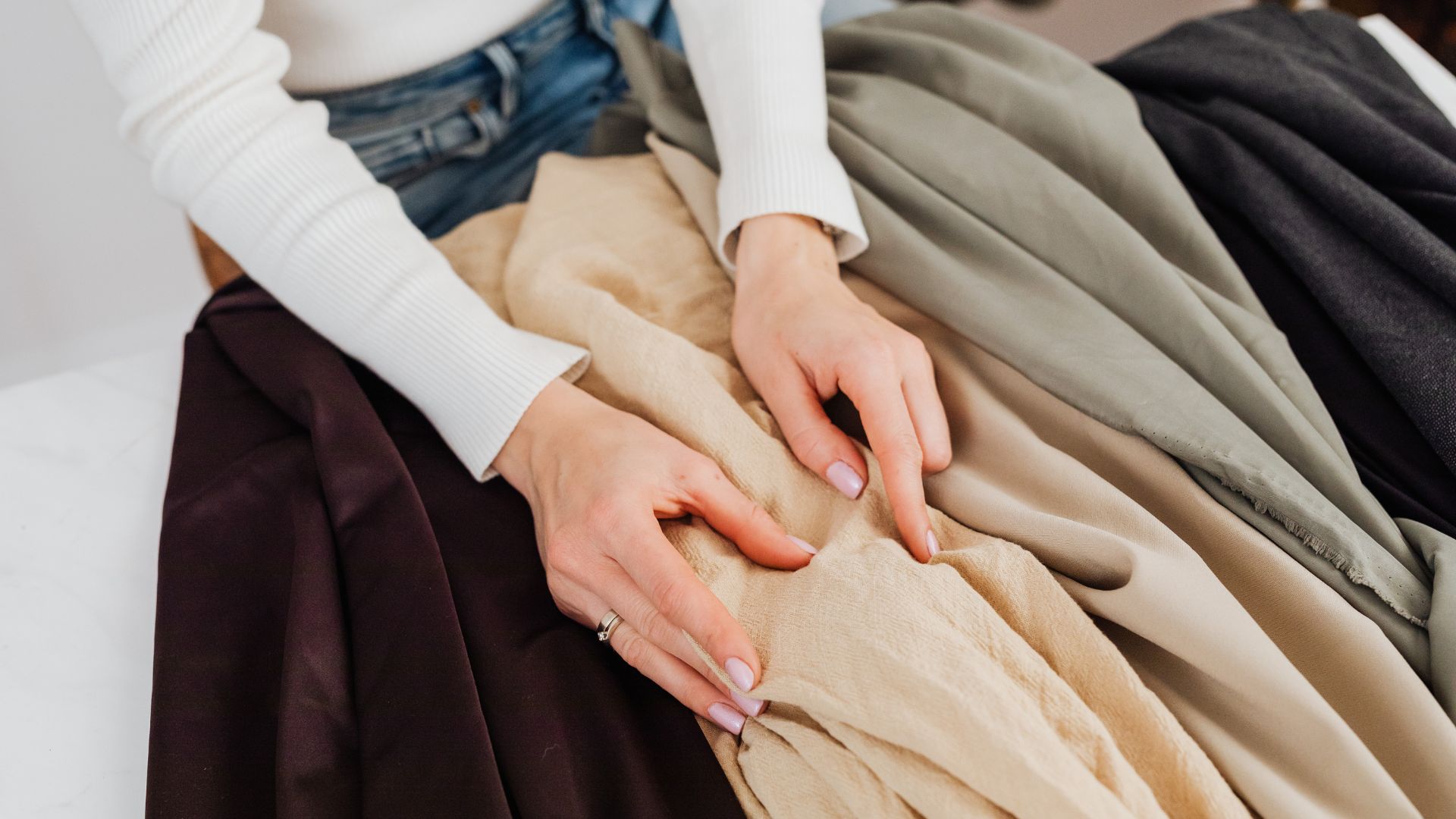
Even a good cut loses out if it’s made from a random material. The fabric or knit affects how a dress sits during a fitting, how it shows off its details, and how its quality is perceived.
When buying wholesale, it’s worth looking at more than colour and pattern. What also counts is:
- the way the material drapes,
- how well it suits the construction,
- the look of its surface,
- how the material sits with the details and finishing.
In elegant women’s clothing, the material should support the design. A dress with a more structured line calls for one kind of behaviour from the fabric, a style with a more relaxed construction for another.
In our production we use only certified materials. For a B2B partner, this is one of the elements that help maintain a defined standard across the collection.
A Polish clothing brand for retailers and boutiques
Marguerite by Mako is a Polish manufacturer of women's clothing that blends manufacturing expertise with modern, elegant design. We create collections with boutiques and wholesalers in mind, paying close attention to seasonality, the functionality of each style and the expectations of end customers. Working with our business partners, we develop a range that not only looks good but also genuinely responds to the needs of the market.
Collections designed to sell
Trend analysis, manufacturing expertise and feedback from our business partners allow us to create styles that fit the needs of boutiques and the expectations of today's customers.
The quality of the finishing shows faster than you might think
A customer in a boutique has the product right in front of her. She can touch it, look at the inside, check the seams, try it on, and see how it looks up close. Poor workmanship is hard to hide in that kind of contact.
So when buying dresses wholesale, you need to pay attention to the things that often fade into the background in product photos:
- even stitching,
- the finishing of the seams,
- how the elements are sewn in,
- the neatness of the details,
- the overall care of the workmanship.
These elements later affect how the retail price is perceived. If a dress looks solid and well finished, it’s easier to justify its place in the boutique’s offer. If the workmanship raises doubts, the problem appears before any conversation about price.
That’s why, at MAKO, we treat careful finishing as an integral part of the product, not a detail visible only under very close inspection.
The collection should let you build a coherent offer
When buying wholesale, you don’t have to judge each style in isolation from the rest. A good collection lets you build a logical group of products in the boutique: similar in style, yet varied enough to give customers a choice.
With dresses, the differences might involve:
- length,
- sleeve construction,
- the degree of fit,
- the character of the material,
- a more everyday or more elegant purpose.
Consistency is especially valuable for boutiques that want to build their own style. A random set of styles from many suppliers can make it harder to create a clear offer. Working with a manufacturer that has a defined aesthetic makes it easier to keep the shop’s character.
With Marguerite by Mako, the direction is clearly defined: femininity, elegance, modernity, and timelessness. Dresses are part of a larger collection that includes, among others, blouses, tunics, trousers, waistcoats, sets, biker jackets, coats, and throw-on layers. This lets a partner build stock across more than a single category.
The wholesale price shouldn’t be the only criterion
When comparing manufacturers’ offers, it’s easy to reduce the decision to price per unit. But that’s only one part of the calculation.
A cheaper dress doesn’t always give a better result if it:
- fits worse,
- is harder to justify at its retail price,
- requires quick markdowns,
- doesn’t suit the shop’s customers,
- differs in quality from the rest of the assortment.
It’s far wiser to weigh the relationship between the purchase cost and the product’s sales potential. A well-cut, carefully made dress in a material that suits the style can give a boutique more room to sell than a product chosen simply because it was the cheapest.
A wholesale purchase should work for your margin through the value of the product, not just a low entry cost.
Check whether the manufacturer really works with B2B partners
A manufacturer that makes clothing for boutiques should understand the specifics of business selling. A shop owner isn’t buying a single dress for personal use. She’s building an offer, planning stock, and judging products through the lens of her customers.
So when choosing a supplier, it’s worth checking whether working with businesses is its standard way of operating.
MAKO sells B2B only. We work with brick-and-mortar boutiques, online shops, wholesalers, distributors, clothing brands, designers, and companies. We operate with partners in Poland and in European markets.
This model means our collections aren’t created from the perspective of our own retail shop. We focus on partners who buy clothing for resale or are looking for production support.
Polish production gives more control over the product
The origin of clothing carries image value for some customers, but for a boutique owner it also matters from a business standpoint. Having your own production facility means the manufacturer has a direct influence on the workmanship and standard of the product.
At MAKO we sew in our own production facility in Poland. We combine tailoring experience with modern design and develop collections with trade partners in mind.
For a boutique, the label “made in Poland” can be an extra argument in its communication, but it shouldn’t remain just a slogan. Its meaning should be visible in the quality of the sewing, the fit of the styles, and the consistency of the workmanship.
When buying wholesale, look at the potential for a longer partnership
A successful first delivery is important, but a manufacturer of women’s clothing should also be judged on the further development of the cooperation.
Over time, a boutique may need:
- additional clothing categories,
- reinforcement of its stylistic direction,
- new styles,
- a more developed relationship with the manufacturer.
That’s why it’s a good idea to choose a company that is open to new commissions and has its own production capacity. At MAKO we work not only with boutiques and wholesalers. We’re also open to fulfilling new commissions for brands, designers, and companies.
This gives a partner the option of starting from a ready-made offer and then developing it in line with the needs of the business.
How to buy women’s dresses for your boutique more knowingly
Before placing an order, it’s worth looking at a collection from three perspectives: the product, the customer, and your own sales model.
On the product side, check the cut, material, workmanship, and size range. On the customer side, assess whether the style suits her taste, her figure, and the way she wears clothing. On the business side, consider whether the collection fits the boutique’s character and gives you room to sell without constant price pressure.
Only that combined view shows whether a given dress is a good wholesale purchase.
At MAKO we create the Marguerite by Mako collections for partners who are looking for elegant women’s clothing made in Poland, refined cuts, and sizes 40–54. We work with certified materials and operate B2B only.
If you run a boutique, an online shop, or a wholesale business, or you’re looking for a production partner for your own brand, get in touch about our wholesale offer and cooperation options. We’ll talk through which solution best fits the profile of your business.