

Boutique display — how to set it up
A well-arranged display can lift sales without adding new floor space and without nervous overhauls of the entire range. In a clothing boutique, what counts isn’t only what hangs on the rails, but also the order of presentation, the rhythm of the collection, the clarity of the layout and the way the customer is guided through the shop. Even very good models lose their power if they’re shown chaotically or packed in too tightly.
Why does display have a real effect on sales?
A customer rarely takes in a whole boutique with the same level of attention. She reacts first to the foreground: the window, the entrance area, the mannequins, the colour, the proportions and the sense of order. Only then does she start to notice the details. If a shop presents its collection clearly from the outset, it’s easier to hold her attention and lead her further in.
A good display helps to:
- show the character of the boutique more quickly,
- highlight the best-selling categories,
- increase sales of complete outfits,
- bring order to a larger number of models without an overloaded effect,
- build a sense of quality and refinement.
In the elegant womenswear segment this matters especially. A customer buys with her eyes, but she only makes a decision once she sees the point of a whole look. A blouse on its own, or trousers on their own, isn’t always enough. Often it’s only the co-ord, the waistcoat, the layering piece or the coat that shows a model’s full potential.
Where to start when arranging a display?
First you have to answer one question: what does the boutique want to sell first? Not everything should be equally visible. A shop needs a hierarchy.
At the outset, it’s good to divide the offer into three groups:
- the strongest models for sales,
- complementary products,
- pieces that build the image of the collection.
This makes it easier to decide what goes at the entrance, what goes on the mannequins and what goes to the far part of the shop. This kind of division brings order to the display and curbs a common mistake — showing everything at once.
If a boutique buys ready-made collections from a manufacturer, the task becomes simpler. A consistent line of cuts, colours and categories gives more freedom in arranging the shop. This is exactly why many B2B partners today look for a supplier who doesn’t sell haphazard models, but rather stocks boutiques with ready-made collections. It makes both stocking and the later presentation on the shop floor easier.
How to set up the entrance area?
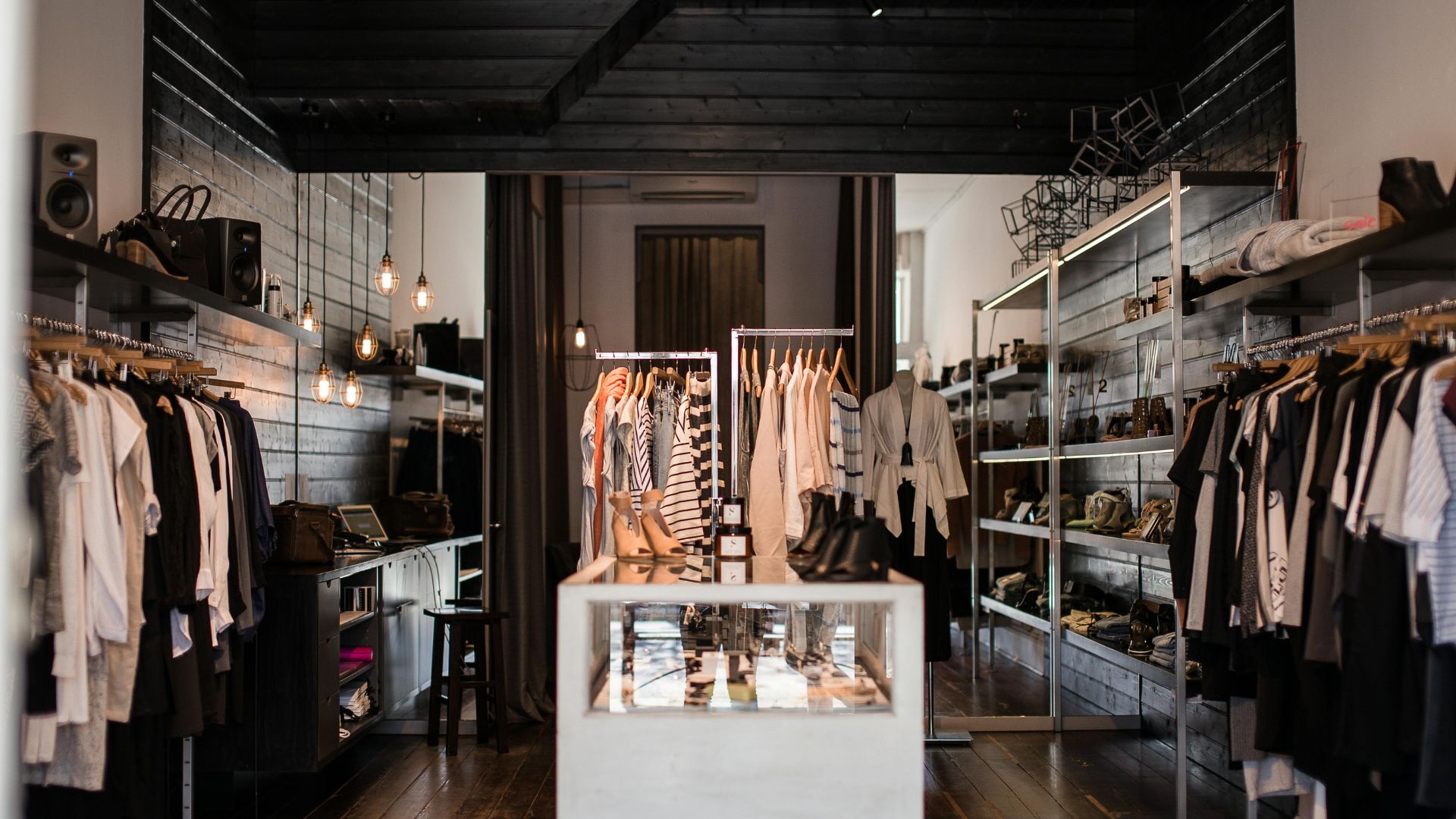
The first few metres decide whether a customer will slow her step and start looking at the offer. The entrance area should be orderly and visually strong, but not overloaded. Its job isn’t to show everything, but to encourage the customer to come further in.
What works well here is:
- 2–3 full silhouettes on mannequins,
- the strongest models of the season,
- outfits that show the character of the shop,
- colours that work well together.
There’s no need to set up too many rails at the entrance. A dense layout takes away the lightness and can make the boutique seem smaller than it really is. It’s far better to leave a little breathing room and go for a clear visual message: this is what our collection looks like, this is our style, this is how our customers dress.
Is it better to build a display by category or by outfit?
It depends on the sales model, but in a clothing boutique a layout based on outfits usually works better than a dry division by category. A customer doesn’t only think, “I need a blouse.” More often she reacts to a ready-made idea for a look.
That’s why it’s good to combine:
- blouses with trousers,
- tunics with slim bottoms,
- waistcoats with a base layer underneath,
- coats and layering pieces with a complete outfit,
- co-ords with additional models from the same line.
This kind of layout increases the chance of selling several pieces during a single visit. It’s also of great value in online shops with a physical outlet or a showroom, because it makes it easier to show the brand’s consistent character.
A division by category makes sense where the range is very broad. Even then, it’s good to keep spots where the boutique presents complete silhouettes. These are what most often trigger the buying decision.
How to work with colour so the display doesn’t look heavy?
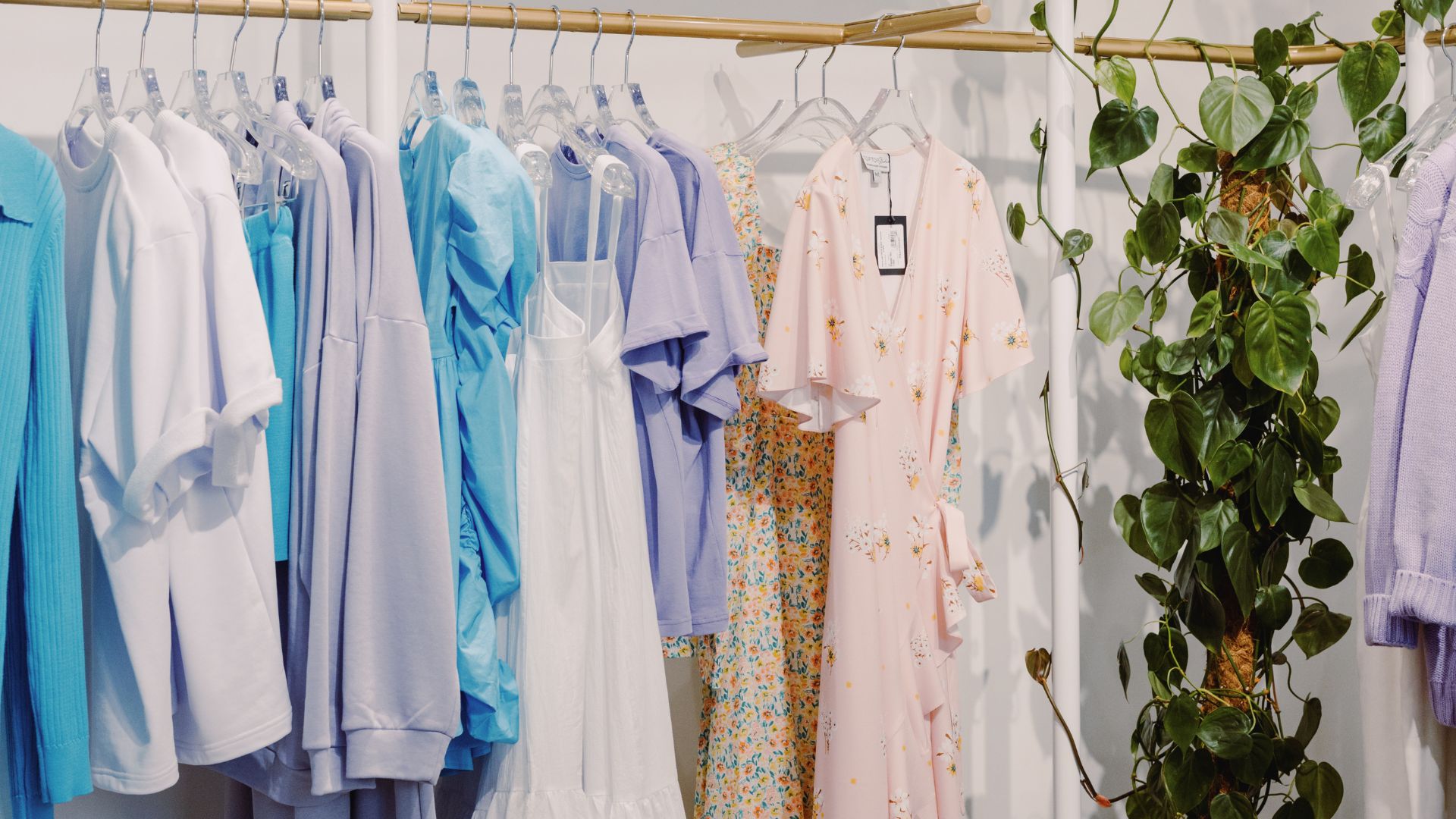
Colour brings order to a shop faster than any description. Well-arranged colour makes it easier for the customer to find her way around the offer, while at the same time building a sense of harmony. The problem arises when random shades, different styles and too many cuts all land on a single rack.
A good direction is:
- grouping models by related tones,
- moving from light to darker shades,
- combining base colours with a single stronger accent,
- making sure cuts that clash don’t hang next to each other.
In elegant womenswear, consistency works particularly well. A customer will more readily trust a collection that looks like a considered whole. This is why ready-made collections from a manufacturer have a big advantage here. When models are created within a single aesthetic line, the boutique doesn’t have to force a display together from pieces of differing character.
How to show sizes without spoiling how the collection reads?
This is a subject that’s sometimes treated as an afterthought, yet it matters a great deal. A boutique should make sure sizes are clear, but without a warehouse feel. The customer should see choice, not chaos.
A few principles work well:
- at the front, show the cut, not the whole spread of sizes,
- duplicate the most important models in the available sizes in an orderly way,
- don’t cram too many pieces onto a single rack,
- make sure the display of larger sizes is as neat as the rest of the shop.
This matters especially in boutiques that aim their offer at women 40+ and work with sizes 40–54. A customer doesn’t want to feel that a larger size is an add-on tucked away to one side. It should be a natural part of the collection and a segment of the offer presented just as well.
A Polish clothing brand for retailers and boutiques
Marguerite by Mako is a Polish manufacturer of women's clothing that blends manufacturing expertise with modern, elegant design. We create collections with boutiques and wholesalers in mind, paying close attention to seasonality, the functionality of each style and the expectations of end customers. Working with our business partners, we develop a range that not only looks good but also genuinely responds to the needs of the market.
Collections designed to sell
Trend analysis, manufacturing expertise and feedback from our business partners allow us to create styles that fit the needs of boutiques and the expectations of today's customers.
Make use of mannequins!
Mannequins sell when they show something specific, not a random assortment. Each silhouette should have a clear function: introducing a new collection, highlighting a category or inspiring the purchase of a complete outfit.
It’s good when mannequins:
- present complete looks,
- show different body proportions,
- are changed regularly,
- stand in places that naturally catch the eye.
A boutique doesn’t need a large number of mannequins. What matters more is what you show on them. Two well-built silhouettes sell more than five set up without any thought. Outfits based on pieces that are easy to combine work particularly well: dresses, co-ords, waistcoats, layering pieces and coats.
How to avoid overloading the boutique?
The most common mistake in display is the urge to show everything. The shop then starts to resemble a warehouse rather than a boutique. The customer sees quantity, but finds it harder to make out the quality and character of the collection.
To avoid this, it’s good to stick to a few principles:
- leave free space between product groups,
- rotate models instead of adding them endlessly,
- show less, but more clearly,
- separate the visually strong pieces from the more basic ones,
- regularly check which spots in the shop are dead zones.
A display is meant to help with choosing. If a customer has to sift through dozens of pieces to understand the offer, the shop is working harder than it should.
Display built around ready-made collections
This is one of the most convenient ways for a boutique to work. Instead of putting together individual models from various sources, the shop receives a collection designed as a coherent whole. This makes it easier to plan the window, the mannequins, the entrance area and the further parts of the premises.
With this kind of setup, you can:
- build a display around collection capsules,
- show complete outfits, not just single pieces,
- combine colours and cuts more easily,
- change the shop layout more quickly without losing consistency.
At MAKO, this is exactly how we look at working with boutiques. It isn’t only about supplying clothing, but about stocking a shop with ready-made collections that can be sold well and shown well. For a trade partner, this means fewer haphazard buying decisions and greater consistency of the offer on the shop floor.
How often should you change the display?
Not every change has to mean rearranging the whole shop. Sometimes it’s enough to move the strongest models, swap the silhouettes on the mannequins or put together a new colour combination. The worst thing is stagnation. A regular customer very quickly stops noticing a boutique that looks identical for a long stretch of time.
It’s good to change:
- the entrance area,
- the mannequins,
- the display of new arrivals,
- the arrangement of the bestsellers,
- the outfits at the central points of the shop.
This kind of rhythm refreshes how the collection is received and helps sell models that didn’t get proper visibility before.
What should a good display communicate?
A good display says clearly: this boutique has style, order and an idea of who its customer is. It’s not about decoration for decoration’s sake. It’s about making it clear at a glance what kind of clothing dominates here and who it was chosen for.
If a shop sells elegant womenswear, the display should be elegant too: calm, orderly, consistent and refined. This effect is easier to achieve when the range itself is coherent. That’s why the choice of a manufacturer who thinks in terms of collections rather than haphazard models matters so much.
If you run a boutique and are looking for a supplier who stocks shops with elegant womenswear and ready-made collections for resale, get in touch with MAKO. We’ll be glad to show how our collections can work not only on the rail, but also in a well-planned boutique display.