

Thought process
Thought process
What messaging in a boutique helps sell quality instead of discounts and markdowns?
A boutique that leans too often on promotions to drive sales quickly falls into a trap. Customers get used to reductions, put off buying until a “better moment” and look at a garment less and less through the lens of cut, quality or fit. They start looking at price alone. That weakens the margin and strips the brand of its character.
That’s why more and more boutique owners are looking for a different direction in their messaging. It’s not about giving up on promotional activity altogether. It’s about shifting the emphasis. A well-run boutique can sell quality, refinement and a considered choice, instead of constantly fighting with discounts. This model builds more lasting relationships with customers and better protects the shop’s positioning.
From our point of view, this begins at the stocking stage. If a boutique wants to talk about quality, it has to carry clothing in its offer that genuinely shows that quality. Messaging alone isn’t enough.
Why a discount shouldn’t be the main language of selling
A reduction works fast, but it rarely builds value for the long term. It helps close a transaction, but it doesn’t teach the customer why a given piece deserves its price. When a shop communicates a promotion too often, it shifts attention from the product to the price. And that changes the way the whole offer is perceived.
In a boutique with elegant womenswear, this matters especially. The customer there isn’t looking only for a bargain. She’s looking for clothes that sit well, look good and don’t disappoint after the first wear. If a shop wants to hold on to that image, it should speak the language of quality, not the language of constant markdowns.
This matters from a B2B buying point of view too. A boutique that builds its sales on quality needs collections that give it strong commercial arguments: good sewing, careful finishing, well-thought-out sizing and fabrics that hold their own in contact with the customer.
What does the customer buy when she isn’t buying a discount?
This question brings order to the whole of your messaging. A customer doesn’t make her decision on price alone. She’s also buying the sense that she’s choosing something refined, sensible and worth its price. The boutique’s job is to name that value in simple, credible language.
Most often, selling quality rests on a few areas:
- fabrics that wear well and look good,
- a cut that works on the figure,
- finishing you can see in the details,
- a timelessness that means the garment doesn’t end after a single season,
- a consistency of collection that gives the customer a ready direction in style.
If these elements are present in the offer, a boutique can run its messaging more calmly, more confidently and without retreating into reductions at every opportunity.
What messaging helps sell quality instead of a discount?
Talk about the make, not just the look
“A beautiful dress” alone isn’t enough. A message like that sets nothing apart. It’s better to show what lies behind how a product is perceived. The customer should hear that a piece was well made, has a refined line and looks good not only in the photo but on the figure too.
Messages like these work well:
- a carefully finished model
- a refined cut
- a cut that sits well on the figure
- clothing made with attention to detail
This is more concrete language. It doesn’t promise too much, but it directs attention to where it really ought to be.
Show the sense behind the price through the fabric
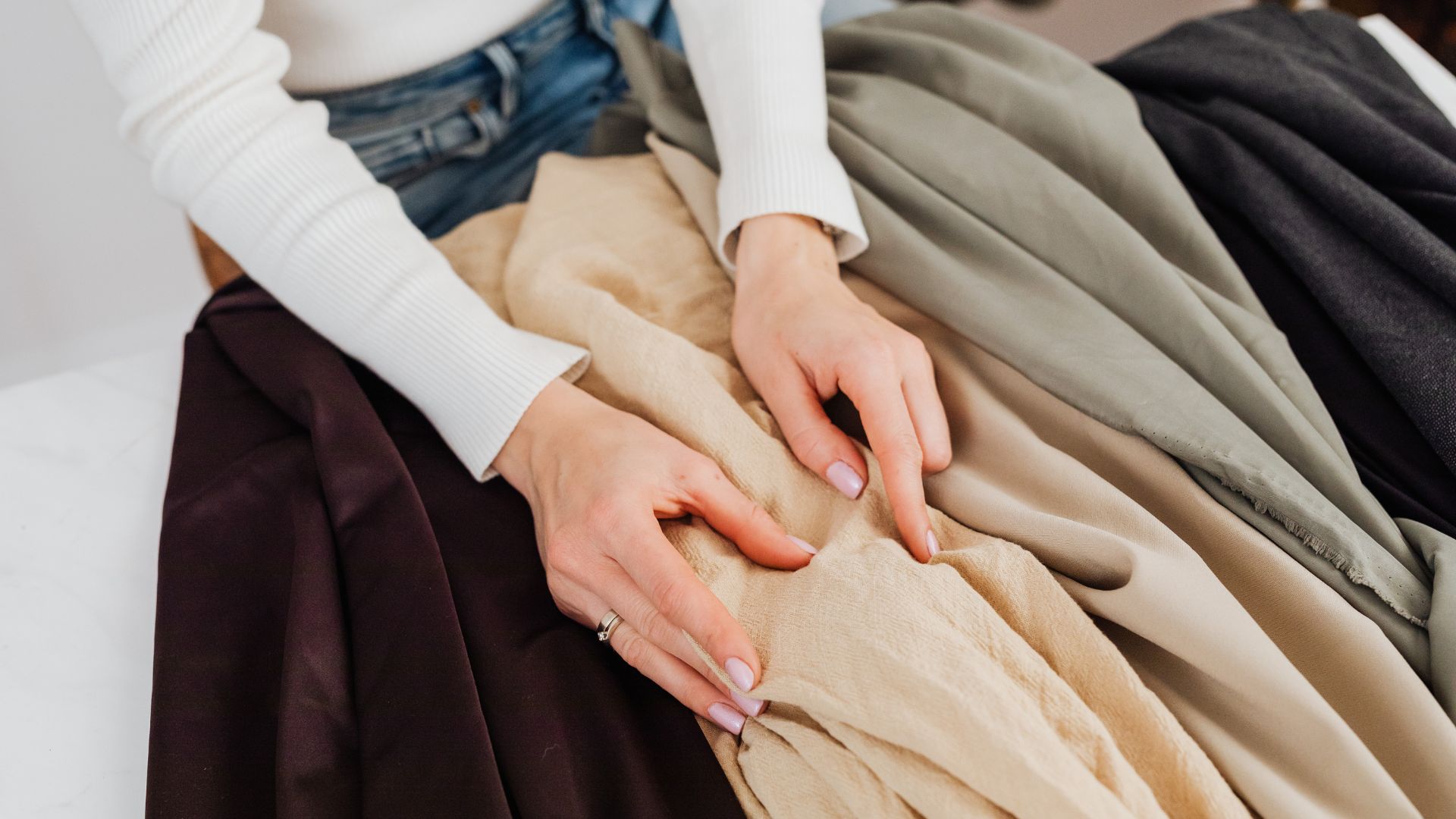
Customers see the difference between something haphazard and something refined, but a boutique should be able to name that difference. Communicating quality often starts with the fabric. If a product was made from good, certified fabrics, that’s a selling point, not a technical detail to be tucked away in the description.
Instead of writing vaguely about “high quality,” it’s better to use messages grounded in specifics:
- a model made from certified fabrics
- a fabric chosen to suit an elegant cut
- a material that holds its shape
- quality you can feel from the first contact with the product
Messaging run this way doesn’t sound pushily sales-driven. It gives the customer a reason to look at a garment more broadly than through the price on the tag.
A Polish clothing brand for retailers and boutiques
Marguerite by Mako is a Polish manufacturer of women's clothing that blends manufacturing expertise with modern, elegant design. We create collections with boutiques and wholesalers in mind, paying close attention to seasonality, the functionality of each style and the expectations of end customers. Working with our business partners, we develop a range that not only looks good but also genuinely responds to the needs of the market.
Collections designed to sell
Trend analysis, manufacturing expertise and feedback from our business partners allow us to create styles that fit the needs of boutiques and the expectations of today's customers.
Emphasise fit and comfort in wear
In elegant womenswear, how a garment sits carries enormous weight. It’s one of the strongest quality arguments, because a customer very quickly judges whether a cut suits her. That’s why sales messaging should draw on the cut, the proportion and the refinement of the shape.
Phrases that help:
- a well-cut fit
- a model designed with good fit in mind
- a line that works well on the figure
- a cut that gives an elegant effect without being overdone
If a boutique aims its offer at mature women, this language becomes more important still. Customers 40+ usually look for clothes that are attractive but also reassuring to wear. They value pieces that don’t call for a compromise between looks and comfort.
Sell the durability of the buying decision
A reduction plays on impulse. Quality plays on reason and on satisfaction with the purchase. That’s why it’s good to speak of a garment as something that will stay with the customer for the long run. Not in the form of overblown claims, but by showing timelessness, versatility and a sensible design.
Example messages:
- a model that doesn’t just hold its own for one season
- a timeless cut for many outfits
- a piece that stays in your wardrobe for the long term
- a considered purchase instead of a fleeting impulse
This matters especially in boutiques building a calmer, more mature and more selective offer.
Talk about Polish production as a value, not a decoration
If a boutique works with a Polish womenswear manufacturer, it shouldn’t treat that merely as a curiosity. Polish production is a concrete commercial value. For many customers, it means greater trust in the make, better control over the process and a more considered choice.
Messages that sound good:
- a collection sewn in Poland
- clothing from a Polish manufacturer
- a model from our own production in Poland
- local production and quality control
This is simple language, but it means something. There’s no need to reinforce it with slogans. The information alone, if real quality stands behind it, works in the boutique’s favour.
Show that the collection is considered, not haphazard
A boutique doesn’t have to convince the customer that every piece is exceptional. It’s better to show that the offer has been put together with purpose. A customer is happier to buy where she sees consistency, follow-through and an aesthetic direction.
Messages of this kind work well:
- a collection built around elegant, modern cuts
- a consistent offer for women looking for refined clothing
- models that can be combined into ready-made looks
- a collection based on a feminine, timeless style
This matters for the selling itself, too. The more consistent the collection, the easier it is to build complementary purchases rather than just single transactions.
Where to place this messaging so it really works
Good sales content shouldn’t be confined to product descriptions alone. Its power grows when it appears at several points of contact with the customer.
It’s best used:
- in the descriptions on the product page,
- in the sales assistant’s communication in the physical boutique,
- in posts and reels on social media,
- on product cards and sales materials,
- in the shop display and the messaging alongside collections.
Consistency is key. If a boutique talks about quality one moment and returns to purely discount-led messaging the next, the customer reads that as inconsistent. The language of quality works when it’s present regularly and grows out of a real offer.
What does communicating quality have to do with a boutique’s stocking?
A great deal. A boutique won’t sell quality through the description alone if the product gives it no arguments for that kind of messaging. That’s why buying decisions and sales strategy should go hand in hand.
If a shop wants to move away from discounts, it should look for a manufacturer who supplies clothing that gives a solid basis for talking about quality. That means collections that are stylistically refined, well made, produced from certified fabrics and designed with real wear in mind.
At MAKO, this is exactly the angle we take on the subject. As a Polish womenswear manufacturer, we supply boutiques with ready-made B2B collections that help build sales on quality, aesthetics and a consistent offer. Our models are made in Poland, from certified fabrics, with an emphasis on careful finishing, good fit and an elegant, modern character. This matters especially for boutiques that want to grow the womenswear segment for customers 40+ and work with sizes 40–54 without slipping into messaging based on price alone. If you’re growing a boutique and want to build your offer around elegant womenswear that gives you arguments to sell on quality rather than discounts, get in touch with MAKO. We supply boutiques, online shops and B2B partners with ready-made collections that help you run consistent, more mature sales messaging.