

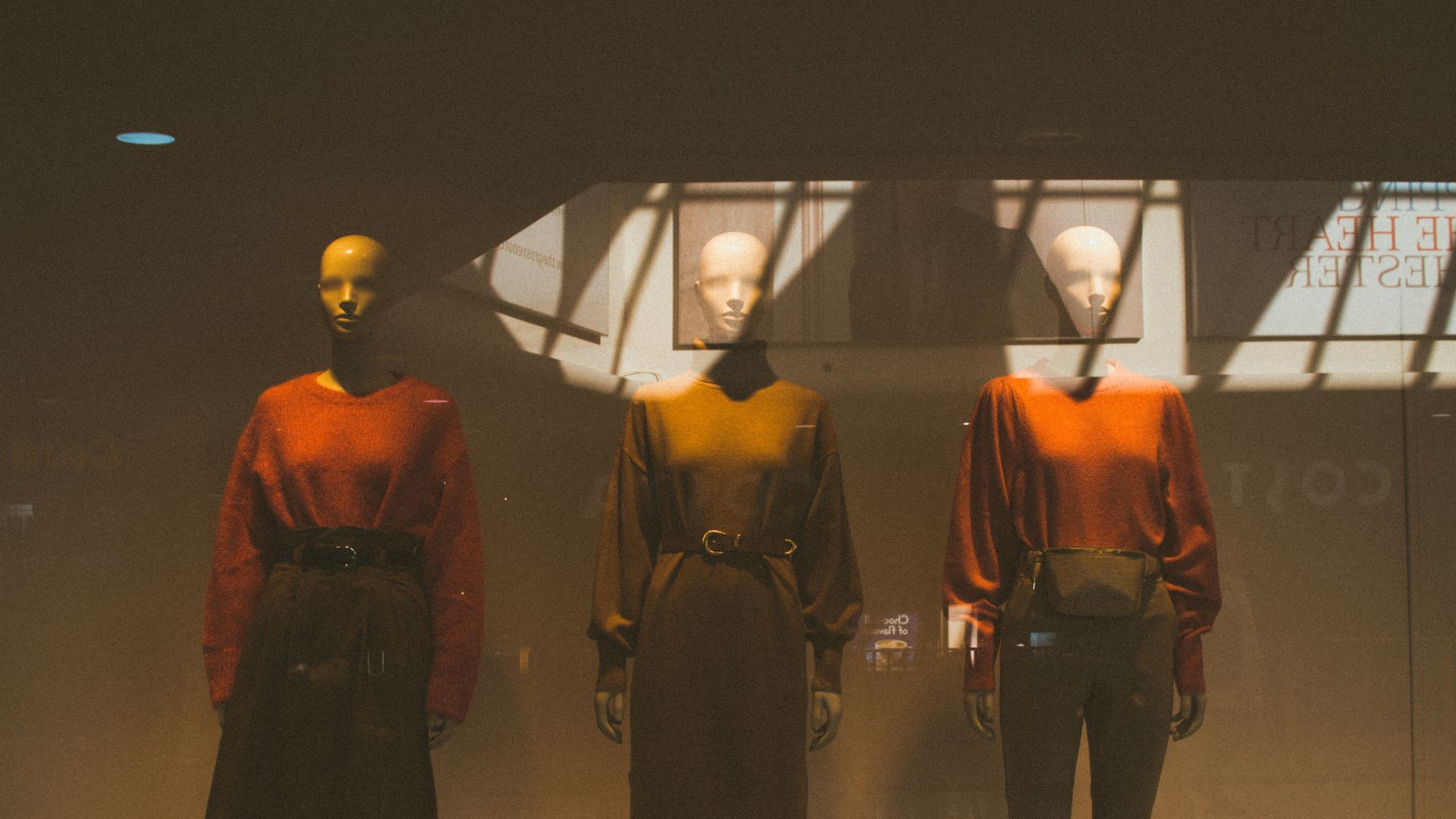
The right mannequin sells more than you might think. It shows the cut, the proportions and the character of a collection before a customer has even reached for a piece on the rail. In a boutique, a mannequin isn’t a decorative extra. It’s a sales tool that shapes how the whole offer is perceived.
We see this very clearly in our work with B2B partners. Even well-made clothing can fall flat visually if it’s shown on the wrong mannequin. The right one, on the other hand, brings out the best in a dress, a coat or a co-ord, and shows off the style of a collection far more effectively. With elegant womenswear this matters all the more, because it comes down to the line of the silhouette, the way the fabric falls and the sense of proportion.
Why the mannequin you choose affects sales
A customer takes in the whole look first and the details second. She looks at the silhouette, the way the garment sits, the length, the proportions and whether the outfit reads as convincing. A mannequin gives shape to that first impression. It shows how a garment works vertically, how it falls across the shoulders, the waist and the hips, and whether the piece really is well cut.
For boutiques selling elegant womenswear, a mannequin helps to:
- show off the cut to better effect,
- present complete looks,
- build a consistent image for the shop,
- draw the eye in the window and on the shop floor,
- make it easier for the customer to picture the garment on herself.
This matters especially when the offer is aimed at women who pay attention to quality, fit and the finer points of finishing. In that segment, a careless display quickly lowers the value the customer perceives.
Where to start when choosing a mannequin
Before you settle on a specific model, it’s worth answering one question: what exactly is this mannequin meant to sell? One will work in the window, another on the shop floor, and another again in a showroom or during a collection presentation for trade partners.
A good choice starts with three things:
- the customer profile,
- the character of the collection,
- the way it will be displayed.
If you sell elegant womenswear, the mannequin should support that aesthetic rather than distract from it. If your range covers sizes 40–54, it’s worth making sure the display isn’t disconnected from the customer’s real figure. If you’re showing dresses, coats, co-ords and layering pieces, you need a model that carries the shape well and doesn’t throw off the proportions of the garments.
Which mannequin to choose for a womenswear boutique
The silhouette should match your target group
This is the most important point. A mannequin shouldn’t be chosen simply because it looks modern or striking. It has to suit the people you’re selling to. If a boutique caters to mature women, an over-stylised, very fashion-forward silhouette can create unnecessary distance.
When choosing, it’s worth paying attention to:
- the proportions of the shoulders, waist and hips,
- the naturalness of the pose,
- how well it shows garment lengths,
- whether the silhouette supports a realistic sense of fit.
At MAKO, we design elegant womenswear with women 40+ and sizes 40–54 in mind. From that perspective, it’s clear that a display works when it helps the customer imagine the garment on her own figure, rather than simply creating a visual effect.
The mannequin’s pose should sit well with the style of the collection
Dynamic poses work well in younger, more trend-led concepts. In a boutique with elegant clothing, mannequins with a calmer, more assured stance work better. A model like this doesn’t compete with the garment. It lets the eye settle on the cut, the fabric and the details.
For feminine, refined and more timeless collections, the mannequins that usually work best are:
- stable on their feet,
- upright in posture,
- with the arms set naturally,
- without any overly theatrical gesture.
This matters especially with coats, co-ords, waistcoats and tunics, where the line of the garment needs to read clearly from several metres away.
Colour and finish shouldn’t overpower the clothing
A mannequin is there to support the product, not to draw attention away from it. That’s why, with elegant womenswear, neutral colours, a matte finish and a understated form tend to work best.
The safest choice is usually:
- white,
- ecru,
- grey,
- beige,
- black, if the display calls for it.
Be wary of shiny surfaces, a very strong gloss or overly decorative details. With a refined collection, that kind of framing often looks too heavy. The customer is meant to see the quality of the garment, not the thing it’s displayed on.
Full-body mannequin, torso or dress form?
Not every boutique needs a single type of display. The best approach is to match the mannequin to the job it’s meant to do.
Full-body mannequin
This is the best choice for the window and the main display on the shop floor. It lets you show a complete look: from a coat or biker jacket, through a blouse and trousers, to a co-ord or a dress.
A full figure works well when you want to:
- build a strong first impression,
- show complete outfits,
- work with length and proportion,
- give the collection a more distinctive character.
Dress form or half-body
This works well in smaller spaces, for displaying blouses, tunics, waistcoats or layering pieces. It’s also a practical solution when you want to make a display denser without overcrowding the shop.
A torso has several advantages:
- it takes up less space,
- it lets you highlight a product’s detail,
- it complements a full-body display nicely,
- it works well for showing selected categories.
More technical forms
Models like these are used more often in the workroom, the showroom or when preparing a collection for a trade presentation. They won’t always be the best choice for the shop itself, but they can be a real help behind the scenes and when working on a collection.
A Polish clothing brand for retailers and boutiques
Marguerite by Mako is a Polish manufacturer of women's clothing that blends manufacturing expertise with modern, elegant design. We create collections with boutiques and wholesalers in mind, paying close attention to seasonality, the functionality of each style and the expectations of end customers. Working with our business partners, we develop a range that not only looks good but also genuinely responds to the needs of the market.
Collections designed to sell
Trend analysis, manufacturing expertise and feedback from our business partners allow us to create styles that fit the needs of boutiques and the expectations of today's customers.
How to match the mannequin to the type of clothing
A mannequin that’s good for showing dresses won’t always be equally good for coats or co-ords. It’s worth thinking about it through the lens of the categories that dominate your offer.
Dresses and tunics
Here the line of the silhouette matters most. The mannequin should show the waist, the hips, the length and the way the fabric falls to good effect. A pose that’s too stiff or too fashion-led can distort how the cut reads.
Blouses, waistcoats and layering pieces
In these categories, what counts is the upper body, the shoulders and the way the fabric drapes. Mannequins with a calm shoulder line and a naturally set torso work well.
Trousers and co-ords
Here the proportions of the whole figure come into play. If the lower half of the silhouette is too far removed from customers’ real shapes, the display loses its credibility. With co-ords, it’s also worth making sure the mannequin shows the relationship between the top and bottom of the look.
Coats and biker jackets
These pieces need room. The mannequin should carry the shape without stiffening it too much. For outerwear, silhouettes that are stable, elegant and legible from a distance work well.
How to use a mannequin so it really drives sales
Buying the right model is only the start. How you use it in the shop matters just as much.
Show complete outfits, not single pieces
A customer finds it far easier to make a decision when she can see a whole look. The mannequin should help tell the story of the collection, not just present a single product.
Outfits work well when they:
- show a ready-made way to wear the pieces,
- combine different categories from the range,
- prompt an add-on purchase,
- reinforce the shop’s aesthetic consistency.
In a boutique with elegant womenswear, a mannequin might pair a blouse with trousers and a waistcoat, for example, or a dress with a layering piece or a coat. A display like this sells not just the product but the style.
Change the display in step with the collection
Even the best mannequin stops working if it shows the same thing for too long. It’s worth changing the looks regularly, shifting the emphasis between categories and adapting the display to the season and your current sales priorities.
This isn’t about constant upheaval. It’s enough for the customer to see that the offer is alive and that the shop is presenting its collection with intent.
Place mannequins where they lead the eye
The models that work hardest are the ones standing at the points of first contact with the offer. Most often these are:
- the window,
- the shop entrance,
- the start of the main aisle,
- the new-arrivals area,
- the spot by the seasonal collection.
It’s important that the mannequin doesn’t get lost among too many competing stimuli. It needs space, light and a clear background. Only then does the garment have a chance to make its mark.
Take care over styling and details
A mannequin won’t rescue a poor display. The garment should be well arranged, pressed and properly fitted to the display figure. With elegant clothing, every detail counts: a turned-up sleeve, a badly set collar or a loosely fastened belt all change how the whole thing reads.
The most common mistakes when choosing and using mannequins
Most problems come not from a lack of budget but from a poor match. A boutique picks a mannequin that looks striking but does little for sales. Or a good model is placed in a way that doesn’t bring out the strengths of the collection.
The most common mistakes are:
- choosing a silhouette disconnected from the target group,
- too fashion-forward a pose for elegant clothing,
- a mannequin whose colour or gloss dominates,
- overloading the styling,
- failing to change the display regularly,
- showing garments that aren’t fitted to the mannequin,
- placing it where the product has no chance to stand out.
A well-chosen mannequin doesn’t have to be the most decorative. Above all, it should be useful. It’s there to help sell the clothing, not to play the lead role in the shop.
The mannequin as part of a consistent brand presentation
A boutique’s image is built from many elements: the collection, the display, the communication and the quality of the product itself. The mannequin ties these areas together, because it stands exactly at the meeting point of fashion and sales. Chosen well, it strengthens how a collection is received. Left to chance, it can undermine even a strong offer.
At MAKO, this is exactly how we look at display. Refined womenswear needs an equally considered presentation. That’s especially true of elegant, feminine and modern collections, where the cut, the proportion and the way a piece sits on the figure all matter. So when planning your sales, it’s worth thinking of the mannequin not as shop equipment but as a tool that helps show the value of the product.
If you’re growing a boutique, an online shop or a sales network and want to present elegant womenswear better, you’ll find more practical material on display, stocking and B2B cooperation on our blog. And if you’re looking for a collection created with boutiques and trade partners in mind, we’d be glad to hear from you — get in touch with our team.